

- Dates – Grand Final: Saturday, 16 May 2009 – 21:00 CEST
- Host – Venue & Location: Olimpiysky Arena (Olympic Stadium, Олимпийский стадион / Спортивный комплекс «Олимпийский», Olimpiyskiy), Moscow, 🇷🇺 Russia
- Presenter (s): Grand Final: Alsou Abramova (Alsou, Алсу́ Абра́мова; Алсу Абрамова) & Ivan Urgant (Ива́н У́ргант) Ι First Semi-Final: Natalia Vodianova (Наталья Водянова) & Andrey Malakhov (Андре́й Мала́хов) Ι Second Semi-Final: Natalia Vodianova (Наталья Водянова) & Andrey Malakhov (Андре́й Мала́хов)
- Musical Director: —
- Director: Andrei Boltenko
- Executive Producer: Yury Aksyuta
- Executive Supervisor: Svante Stockselius
- Multicamera Director: Andrey Boltenko
- Host broadcaster: Channel One (Первый канал) (C1R)
- Motto: —
- Opening Act: Cirque du Soleil performance (Prodigal Son), Dima Bilan with “Believe”.
- Interval Act: Fuerza Bruta (Fuerzabruta) performance.
- Participants – Number of entries: 42: Final 25 [🇱🇹 Lithuania (10ª), 🇮🇱 Israel (28ª), 🇫🇷 France (49ª), 🇸🇪 Sweden (46ª), 🇭🇷 Croatia (16ª), 🇵🇹 Portugal (40ª), 🇮🇸 Iceland (22ª), 🇬🇷 Greece (28ª), 🇦🇲 Armenia (4ª), 🇷🇺 Russia (12ª), 🇦🇿 Azerbaijan (2ª), 🇧🇦 Bosnia and Herzegovina (14ª), Moldova (5ª), 🇲🇹 Malta (21ª), 🇪🇪 Estonia (14ª), 🇩🇰 Denmark (38ª), 🇩🇪 Germany (49ª), 🇹🇷 Turkey (30ª), 🇦🇱 Albania (6ª), 🇳🇴 Norway (45ª), 🇺🇦 Ukraine (7ª), 🇷🇴 Romania (11ª), 🇬🇧 United Kindom (48ª), 🇫🇮 Finland (40ª), 🇪🇸 Spain (45ª)]; First Semi-Final 18 [🇲🇪 Montenegro (3ª), 🇨🇿 Czech Republic (3ª), 🇧🇪 Belgium (48ª), 🇧🇾 Belarus (6ª), 🇸🇪 Sweden (46ª), 🇦🇲 Armenia (4ª), 🇦🇩 Andorra (6ª), 🇨🇭 Switzerland (48ª), 🇹🇷 Turkey (30ª), 🇮🇱 Israel (28ª), 🇧🇬 Bulgaria (5ª), 🇮🇸 Iceland (22ª), 🇲🇰 FYRO Macedonia (9ª), 🇷🇴 Romania (11ª), 🇫🇮 Finland (40ª), 🇵🇹 Portugal (40ª), 🇲🇹 Malta (21ª), 🇧🇦 Bosnia and Herzegovina (14ª)]; Second Semi-Final 19 [🇭🇷 Croatia (16ª), 🇮🇪 Ireland (40ª), 🇱🇻 Latvia (9ª), 🇷🇸 Serbia (4ª), 🇵🇱 Poland (14ª), 🇳🇴 Norway (45ª), 🇨🇾 Cyprus (27ª), 🇸🇰 Slovakia (4ª), 🇩🇰 Denmark (38ª), 🇸🇮 Slovenia (14ª), 🇭🇺 Hungary (8ª), 🇦🇿 Azerbaijan (2ª), 🇬🇷 Greece (28ª), 🇱🇹 Lithuania (10ª), 🇲🇩 Moldova (5ª), 🇦🇱 Albania (6ª), 🇺🇦 Ukraine (7ª), 🇪🇪 Estonia (14ª), 🇳🇱 The Netherlands (47ª)]
- Debuting countries: —
- Return: 🇸🇰 Slovakia (4ª)
- Non-returning countries: 🇬🇪 Georgia (2ª), 🇸🇲 San Marino (1ª)
- Vote – Voting system: Each country awarded 12, 10, 8–1 points to their 10 favourite songs.
- Nil Points: 🇨🇿 Czech Republic (SF1) (ª)
- Winning song:
 “Fairytale” – Alexander Rybak (Аляксандр Рыбак, Alyaksandr Rybak) – 🇳🇴 Norway (3ª)

About/Overview. Moscow staged one of the most ambitious productions in the Contest’s history, taking over the capital’s Olympic Indoor Arena.
The stage design made unprecedented use of LED technology, reportedly incorporating a third of the world’s available LED screens, allowing for dynamic, fully digital backdrops and transitions.
The European Broadcasting Union (EBU) reintroduced national juries in 2009 to balance the influence of televoting and address concerns about regional voting biases, reward musical merit and strengthen credibility.
Jury rankings were combined with televoting, with each accounting for 50% of a country’s final result.
For the first time, the Contest was presented by two different pairs of hosts. Supermodel Natalya Vodyanova and TV host Andrey Malakhov presented both Semi-Finals, while the Grand Final was hosted by singer Alsou, who had competed for Russia at Stockholm 2000, alongside TV personality Ivan Urgant.
Alexander Rybak’s victory for Norway at Moscow 2009 was on a large scale, in terms of both the song’s score and its impact.
His athletic performance of the folk-pop Fairytale, which he sang while playing the violin, remains one of the most famous performances in the Contest’s history. With it, he walked away with 387 points – at the time an all-time high – and he was awarded another 16 sets of 12 points, another record broken by the artist.
Rybak gave Norway its third win after Bobbysocks in 1985 and Secret Garden in 1995.
The United Kingdom pulled in the talents of two of the world’s most renowned songwriters – Andrew Lloyd Weber and Diane Warren – in an attempt to yield a result closer to the top of the scoreboard, which had eluded them for most of the ‘00s.
The approach paid off and, although Jade Ewen didn’t win with Llyod-Webber/Warren’s My Time, she did finish fifth – the nation’s best result since 2002.
Georgia ended up withdrawing after it was ruled that its selected song, We Don’t Wanna Put In by Stephane & 3G, violated the Contest’s rules prohibiting political content. The broadcaster declined to replace the entry and chose not to compete.
Moscow staged one of the most ambitious productions in the Contest’s history, taking over the capital’s Olympic Indoor Arena.
The stage design made unprecedented use of LED technology, reportedly incorporating a third of the world’s available LED screens, allowing for dynamic, fully digital backdrops and transitions.
The European Broadcasting Union (EBU) reintroduced national juries in 2009 to balance the influence of televoting and address concerns about regional voting biases, reward musical merit and strengthen credibility.
Jury rankings were combined with televoting, with each accounting for 50% of a country’s final result.
For the first time, the Contest was presented by two different pairs of hosts. Supermodel Natalya Vodyanova and TV host Andrey Malakhov presented both Semi-Finals, while the Grand Final was hosted by singer Alsou, who had competed for Russia at Stockholm 2000, alongside TV personality Ivan Urgant.
Alexander Rybak’s victory for Norway at Moscow 2009 was on a large scale, in terms of both the song’s score and its impact.
His athletic performance of the folk-pop Fairytale, which he sang while playing the violin, remains one of the most famous performances in the Contest’s history. With it, he walked away with 387 points – at the time an all-time high – and he was awarded another 16 sets of 12 points, another record broken by the artist.
Rybak gave Norway its third win after Bobbysocks in 1985 and Secret Garden in 1995.
The United Kingdom pulled in the talents of two of the world’s most renowned songwriters – Andrew Lloyd Weber and Diane Warren – in an attempt to yield a result closer to the top of the scoreboard, which had eluded them for most of the ‘00s.
The approach paid off and, although Jade Ewen didn’t win with Llyod-Webber/Warren’s My Time, she did finish fifth – the nation’s best result since 2002.
Georgia ended up withdrawing after it was ruled that its selected song, We Don’t Wanna Put In by Stephane & 3G, violated the Contest’s rules prohibiting political content. The broadcaster declined to replace the entry and chose not to compete.
For the second time in the history of the Eurovision Song Contest, two Semi-Finals were held to decide which 25 countries will be represented in the Final. The Final of the contest took place on the 16th of May in the Russian capital of Moscow. While it had been the Russian broadcaster RTR who had won the contest the year before, it was decided that Channel One Russia would host the competition instead. They organised one of the biggest contests in the history of the event. The stage consisted of 1/3 of the world’s available LED screens at that time. Vladimir Putin, who was Prime Minister of Russia at the time, visited the Olympic Indoor Arena to see the preparations for the Eurovision Song Contest for himself. National juries were re-introduced alongside televoting, each accounting for 50% of the result. Georgia’s entry was deemed to have broken the rules of the contest and the country chose to withdraw rather than submit a different song. Estonia finished a credible sixth with the song Rändajad, the first song to be performed fully in Estonian since 1998 (their entry in 2004 was performed in a dialect). The United Kingdom scored its best placing since 2002 when Jade Ewen finished in fifth place with the song “My Time”, written by Dianne Warren and composed by Andrew Lloyd Webber.
About the winner. There was no stopping the Norwegian violin-playing star, Alexander Rybak and his entry “Fairytale”. It received a record-breaking 387 points out of a possible 492, the highest total score in Eurovision history at that time.
Facts and figures. For the first time the contest was presented by two different pairs of hosts – one pair in the Semi-Finals and the other pair in the Grand Final. Both Semi-Finals were hosted by the supermodel Natalya Vodyanova and popular TV host Andrey Malakhov. The Grand Final was hosted by the singer (and their 2000 contest participant) Alsou and the TV star Ivan Urgant; Chaira, who achieved two of Malta’s best placings second and third, in 2005 and 1998 respectively, returned to the competition but finished in 22nd place in the Grand Final.
Final:
| o/r | Country | participant(s) | SONG – TRANSLATE – LANGUAGE | Points | rank |
|---|---|---|---|---|---|
| 01 | 🇱🇹 Lithuania LRT | Sasha Son (Sasha Song) | Love (Meilė / Pasiklydęs žmogus, The Lost Man) English, Russian | 023 | 23 |
| 02 | 🇮🇱 Israel IBA | Noa & Mira Awad (אחינועם ניניו מירה עווד) | There must be another way (Einaiych, עינייך, Your Eyes) English, Hebrew, Arabic | 053 | 16 |
| 03 | 🇫🇷 France France 3 | Patricia Kaas | Et s’il fallait le faire French | 107 | 08 |
| 04 | 🇸🇪 Sweden SVT | Malena Ernman | La voix (Rösten, The voice) English, French | 033 | 21 |
| 05 | 🇭🇷 Croatia HRT | Igor Cukrov feat. Andrea (Игор Цукров feat. Andrea Šušnjara ) | Liepa tena (Лијепа Тена, Beautiful Tena) Croatian | 045 | 18 |
| 06 | 🇵🇹 Portugal RTP | Flor-de-Lis | Todas as ruas do amor (All the streets of love) Portuguese | 057 | 15 |
| 07 | 🇮🇸 Iceland RÚV | Yohanna (Jóhanna, Jóhanna Guðrún Jónsdóttir) | Is it true? (Er það satt?) English | 218 | 02 |
| 08 | 🇬🇷 Greece ERT | Sakis Rouvas (Σάκη Ρουβά) | This is our night (Αυτή είναι η βραδιά μας) Englsih | 120 | 07 |
| 09 | 🇦🇲 Armenia AMPTV | Inga & Anush (Ինգա և Անուշ, Ինգա և Անուշ Արշակյաններ, Inga and Anush Arshakyan) | Jan Jan (Ջան Ջան, Nor par (Jan jan), Նոր պար (Ջան ջան), My dear) English, Armenian | 092 | 10 |
| 10 | 🇷🇺 Russia C1R | Anastasiya Prikhodko (Анастасія Приходько, Анастасия Приходько, Анастаси́я Прихо́дько, Anastasia Prykhodko) | Mamo (Мамо, Мама, Mum) Russian, Ukrainian | 091 | 11 |
| 11 | 🇦🇿 Azerbaijan İctimai | AySel & Arash (Aysel & Arəş) | Always (Həmişə) English | 207 | 03 |
| 12 | 🇧🇦 Bosnia and Herzegovina BHRT | Regina (Регина) | Bistra voda (Бистра вода, Clear water) Bosnian | 106 | 09 |
| 13 | 🇲🇩 Moldova TRM | Nelly Ciobanu | Hora din Moldova (Hora from Moldova, Dance From Moldova) Romanian, English | 069 | 14 |
| 14 | 🇲🇹 Malta PBS | Chiara | What if we (Li Kieku Aħna) English | 031 | 22 |
| 15 | 🇪🇪 Estonia ERR | Urban Symphony | Rändajad (Passenger / Nomads / Travellers) Estonian | 129 | 06 |
| 16 | 🇩🇰 Denmark DR | Brinck (Niels Brinck) | Believe again English | 074 | 13 |
| 17 | 🇩🇪 Germany NDR | Alex Swings Oscar Sings! | Miss kiss kiss bang (Ջան Ջան) | 035 | 20 |
| 18 | 🇹🇷 Turkey TRT | Hadise | Düm tek tek English[b] | 177 | 04 |
| 19 | 🇦🇱 Albania RTSH | Kejsi Tola | Carry me in your dreams (Më merr në ëndërr, Take me into your dreams) English | 048 | 17 |
| 20 | 🇳🇴 Norway NRK winner | Alexander Rybak (Аляксандра Рыбака) | Fairytale (Eventyr) English | 387 | 01 |
| 21 | 🇺🇦 Ukraine NTU | Svetlana Loboda (Світлана Лобода) | Be my Valentine! (Anti-crisis girl) [Be My Valentine, Будь моїм Валентином! (Антикризисна дівчина)] English | 076 | 12 |
| 22 | 🇷🇴 Romania TVR | Elena (Elena Gheorghe) | The Balkan girls (Fetele din Balcani) English | 040 | 19 |
| 23 | 🇬🇧 United Kindom BBC | Jade Ewen | It’s my time English | 173 | 05 |
| 24 | 🇫🇮 Finland YLE | Waldo’s People | Lose Control (Menettää hallinta) English | 022 | 25 |
| 25 | 🇪🇸 Spain TVE | Soraya (Soraya Arnelas) | La noche es para mí (The Night Is For Me) Spanish, English | 023 | 24 |
- Dates – First Semi-Final: Tuesday, 12 May 2009 – 21:00 CEST
- Host – Venue & Location: Olimpiysky Arena (Olympic Stadium, Олимпийский стадион / Спортивный комплекс «Олимпийский», Olimpiyskiy), Moscow, 🇷🇺 Russia
- Presenter (s): Grand Final: Alsou Abramova (Alsou, Алсу́ Абра́мова; Алсу Абрамова) & Ivan Urgant (Ива́н У́ргант) Ι First Semi-Final: Natalia Vodianova (Наталья Водянова) & Andrey Malakhov (Андре́й Мала́хов) Ι Second Semi-Final: Natalia Vodianova (Наталья Водянова) & Andrey Malakhov (Андре́й Мала́хов)
- Musical Director: —
- Director: Andrei Boltenko
- Executive Producer: Yury Aksyuta
- Executive Supervisor: Svante Stockselius
- Multicamera Director: Andrey Boltenko
- Host broadcaster: Channel One (Первый канал) (C1R)
- Motto: —
- Opening Act: The Tolmachevy Twins.
- Interval Act: Alexandrov Ensemble feat. t.A.T.u. with “Not Gonna Get Us”.
- Participants – Number of entries: 42: Final 25 [🇱🇹 Lithuania (10ª), 🇮🇱 Israel (28ª), 🇫🇷 France (49ª), 🇸🇪 Sweden (46ª), 🇭🇷 Croatia (16ª), 🇵🇹 Portugal (40ª), 🇮🇸 Iceland (22ª), 🇬🇷 Greece (28ª), 🇦🇲 Armenia (4ª), 🇷🇺 Russia (12ª), 🇦🇿 Azerbaijan (2ª), 🇧🇦 Bosnia and Herzegovina (14ª), Moldova (5ª), 🇲🇹 Malta (21ª), 🇪🇪 Estonia (14ª), 🇩🇰 Denmark (38ª), 🇩🇪 Germany (49ª), 🇹🇷 Turkey (30ª), 🇦🇱 Albania (6ª), 🇳🇴 Norway (45ª), 🇺🇦 Ukraine (7ª), 🇷🇴 Romania (11ª), 🇬🇧 United Kindom (48ª), 🇫🇮 Finland (40ª), 🇪🇸 Spain (45ª)]; First Semi-Final 18 [🇲🇪 Montenegro (3ª), 🇨🇿 Czech Republic (3ª), 🇧🇪 Belgium (48ª), 🇧🇾 Belarus (6ª), 🇸🇪 Sweden (46ª), 🇦🇲 Armenia (4ª), 🇦🇩 Andorra (6ª), 🇨🇭 Switzerland (48ª), 🇹🇷 Turkey (30ª), 🇮🇱 Israel (28ª), 🇧🇬 Bulgaria (5ª), 🇮🇸 Iceland (22ª), 🇲🇰 FYRO Macedonia (9ª), 🇷🇴 Romania (11ª), 🇫🇮 Finland (40ª), 🇵🇹 Portugal (40ª), 🇲🇹 Malta (21ª), 🇧🇦 Bosnia and Herzegovina (14ª)]; Second Semi-Final 19 [🇭🇷 Croatia (16ª), 🇮🇪Ireland (40ª), 🇱🇻 Latvia (9ª), 🇷🇸 Serbia (4ª), 🇵🇱 Poland (14ª), 🇳🇴 Norway (45ª), 🇨🇾 Cyprus (27ª), 🇸🇰 Slovakia (4ª), 🇩🇰 Denmark (38ª), 🇸🇮 Slovenia (14ª), 🇭🇺 Hungary (8ª), 🇦🇿 Azerbaijan (2ª), 🇬🇷 Greece (28ª), 🇱🇹 Lithuania (10ª), 🇲🇩 Moldova (5ª), 🇦🇱 Albania (6ª), 🇺🇦 Ukraine (7ª), 🇪🇪 Estonia (14ª), 🇳🇱 The Netherlands (47ª)]
- Debuting countries: —
- Return: 🇸🇰 Slovakia (4ª)
- Non-returning countries: 🇬🇪 Georgia (2ª), 🇸🇲 San Marino (1ª)
- Vote – Voting system: Each country awarded 12, 10, 8–1 points to their 10 favourite songs.
- Nil Points: 🇨🇿 Czech Republic (SF1) (ª)
- Winning song: “Is it true?” – Yohanna – 🇮🇸 Iceland (1ª)
About/Overview. For the second time in the history of the Eurovision Song Contest, two Semi-Finals were held to decide which 25 countries will be represented in the Final. The Final of the contest took place on the 16th of May in the Russian capital of Moscow. While it had been the Russian broadcaster RTR who had won the contest the year before, it was decided that Channel One Russia would host the competition instead. They organised one of the biggest contests in the history of the event. The stage consisted of 1/3 of the world’s available LED screens at that time. Vladimir Putin, who was Prime Minister of Russia at the time, visited the Olympic Indoor Arena to see the preparations for the Eurovision Song Contest for himself. National juries were re-introduced alongside televoting, each accounting for 50% of the result. Georgia’s entry was deemed to have broken the rules of the contest and the country chose to withdraw rather than submit a different song. Estonia finished a credible sixth with the song Rändajad, the first song to be performed fully in Estonian since 1998 (their entry in 2004 was performed in a dialect). The United Kingdom scored its best placing since 2002 when Jade Ewen finished in fifth place with the song “My Time”, written by Dianne Warren and composed by Andrew Lloyd Webber.
About the winner. There was no stopping the Norwegian violin-playing star, Alexander Rybak and his entry “Fairytale”. It received a record-breaking 387 points out of a possible 492, the highest total score in Eurovision history at that time.
Facts and figures. For the first time the contest was presented by two different pairs of hosts – one pair in the Semi-Finals and the other pair in the Grand Final. Both Semi-Finals were hosted by the supermodel Natalya Vodyanova and popular TV host Andrey Malakhov. The Grand Final was hosted by the singer (and their 2000 contest participant) Alsou and the TV star Ivan Urgant; Chaira, who achieved two of Malta’s best placings second and third, in 2005 and 1998 respectively, returned to the competition but finished in 22nd place in the Grand Final.
First Semi-Final: [Q] – Qualifiers
| o/r | Country | participant(s) | SONG – TRANSLATE – LANGUAGE | Points | rank |
|---|---|---|---|---|---|
| 01 | 🇲🇪 Montenegro RTCG | Andrea Demirović (Андреа Демировић) | Just get out of my life (Само изађи из мог живота) English | 044 | 11 |
| 02 | 🇨🇿 Czech Republic ČT | Gipsy.cz | Aven romale (Come in gypsies) English, Romani | 000 | 18 |
| 03 | 🇧🇪 Belgium RTBF | Copycat (Patrick Ouchène) | Copycat English | 001 | 17 |
| 04 | 🇧🇾 Belarus BTRC | Petr Elfimov (Пётр Ялфімаў, Pyotr Yalfimaw, Пётр Елфимов, Pyotr Yelfimov,Пятро Ялфімаў) | Eyes that never lie (Вочы, якія ніколі ня маняць) English | 025 | 13 |
| 05 | 🇸🇪 Sweden SVT qualifier | Malena Ernman | La voix (Rösten, The voice) French, English | 105 | 04 |
| 06 | 🇦🇲 Armenia AMPTV qualifier | Inga & Anush (Ինգա և Անուշ, Ինգա և Անուշ Արշակյաններ, Inga and Anush Arshakyan) | Jan Jan (Ջան Ջան, Nor par (Jan jan), Նոր պար (Ջան ջան), My dear) English, Armenian | 099 | 05 |
| 07 | 🇦🇩 Andorra RTVA | Susanne Georgi | La teva decisió (Get a life) [Your decision (Get a Life), Tú decisión (Búscate una vida)] Catalan, English | 008 | 15 |
| 08 | 🇨🇭 Switzerland SRG SSR idée suisse | Lovebugs | The highest heights English | 015 | 14 |
| 09 | 🇹🇷 Turkey TRT qualifier | Hadise | Düm tek tek English[b] | 172 | 02 |
| 10 | 🇮🇱 Israel IBA qualifier | Noa & Mira Awad (אחינועם ניניו מירה עווד) | There must be another way (Einaiych, עינייך, Your Eyes) English, Hebrew, Arabic | 075 | 07 |
| 11 | 🇧🇬 Bulgaria BNT | Krassimir Avramov (Красимир Аврамов) | Illusion (Илюзия) English | 007 | 16 |
| 12 | 🇮🇸 Iceland RÚV qualifier | Yohanna (Jóhanna, Jóhanna Guðrún Jónsdóttir) | Is It True? (Er það satt?) English | 174 | 01 |
| 13 | 🇲🇰 FYRO Macedonia MKRTV | Next Time (Некст Тајм) | Nešto što kje ostane (Нешто што ќе остане, Something that will remain) Macedonian | 045 | 10 |
| 14 | 🇷🇴 Romania TVR qualifier | Elena (Elena Gheorghe) | The Balkan girls (Fetele din Balcani) English | 067 | 09 |
| 15 | 🇫🇮 Finland YLE qualifier | Waldo’s People | Lose control (Menettää hallinta) English | 042 | 12 |
| 16 | 🇵🇹 Portugal RTP qualifier | Flor-de-Lis | Todas as ruas do amor (All the streets of love) Portuguese | 070 | 08 |
| 17 | 🇲🇹 Malta PBS qualifier | Chiara | What if we (Li Kieku Aħna) English | 086 | 06 |
| 18 | 🇧🇦 Bosnia and Herzegovina BHRT qualifier | Regina (Регина) | Bistra voda (Бистра вода, Clear water) Bosnian | 125 | 03 |
- Dates – Second Semi-Final: Thursday, 14 May, 2009, 21:00 CEST
- Host – Venue & Location: Olimpiysky Arena (Olympic Stadium, Олимпийский стадион / Спортивный комплекс «Олимпийский», Olimpiyskiy), Moscow, 🇷🇺 Russia
- Presenter (s): Grand Final: Alsou Abramova (Alsou, Алсу́ Абра́мова; Алсу Абрамова) & Ivan Urgant (Ива́н У́ргант) Ι First Semi-Final: Natalia Vodianova (Наталья Водянова) & Andrey Malakhov (Андре́й Мала́хов) Ι Second Semi-Final: Natalia Vodianova (Наталья Водянова) & Andrey Malakhov (Андре́й Мала́хов)
- Musical Director: —
- Director: Andrei Boltenko
- Executive Producer: Yury Aksyuta
- Executive Supervisor: Svante Stockselius
- Multicamera Director: Andrey Boltenko
- Host broadcaster: Channel One (Первый канал) (C1R)
- Motto: —
- Opening Act: “Eurovision Winners Songs Mix” by Terem Quartet (Терем Квартет), Russian national ballet “Kostroma”, Ensemble of Russian Airforce, Show-ballet “Art Dogs”.
- Interval Act: Igor Moiseyev Ensemble – “Folk Dances from Different Countries”.
- Participants – Number of entries: 42: Final 25 [🇱🇹 Lithuania (10ª), 🇮🇱 Israel (28ª), 🇫🇷 France (49ª), 🇸🇪 Sweden (46ª), 🇭🇷 Croatia (16ª), 🇵🇹 Portugal (40ª), 🇮🇸 Iceland (22ª), 🇬🇷 Greece (28ª), 🇦🇲 Armenia (4ª), 🇷🇺 Russia (12ª), 🇦🇿 Azerbaijan (2ª), 🇧🇦 Bosnia and Herzegovina (14ª), Moldova (5ª), 🇲🇹 Malta (21ª), 🇪🇪 Estonia (14ª), 🇩🇰 Denmark (38ª), 🇩🇪 Germany (49ª), 🇹🇷 Turkey (30ª), 🇦🇱 Albania (6ª), 🇳🇴 Norway (45ª), 🇺🇦 Ukraine (7ª), 🇷🇴 Romania (11ª), 🇬🇧 United Kindom (48ª), 🇫🇮 Finland (40ª), 🇪🇸 Spain (45ª)]; First Semi-Final 18 [🇲🇪 Montenegro (3ª), 🇨🇿 Czech Republic (3ª), 🇧🇪 Belgium (48ª), 🇧🇾 Belarus (6ª), 🇸🇪 Sweden (46ª), 🇦🇲 Armenia (4ª), 🇦🇩 Andorra (6ª), 🇨🇭 Switzerland (48ª), 🇹🇷 Turkey (30ª), 🇮🇱 Israel (28ª), 🇧🇬 Bulgaria (5ª), 🇮🇸 Iceland (22ª), 🇲🇰 FYRO Macedonia (9ª), 🇷🇴 Romania (11ª), 🇫🇮 Finland (40ª), 🇵🇹 Portugal (40ª), 🇲🇹 Malta (21ª), 🇧🇦 Bosnia and Herzegovina (14ª)]; Second Semi-Final 19 [🇭🇷 Croatia (16ª), 🇮🇪 Ireland (40ª), 🇱🇻 Latvia (9ª), 🇷🇸 Serbia (4ª), 🇵🇱 Poland (14ª), 🇳🇴 Norway (45ª), 🇨🇾 Cyprus (27ª), 🇸🇰 Slovakia (4ª), 🇩🇰 Denmark (38ª), 🇸🇮 Slovenia (14ª), 🇭🇺 Hungary (8ª), 🇦🇿 Azerbaijan (2ª), 🇬🇷 Greece (28ª), 🇱🇹 Lithuania (10ª), 🇲🇩 Moldova (5ª), 🇦🇱 Albania (6ª), 🇺🇦 Ukraine (7ª), 🇪🇪 Estonia (14ª), 🇳🇱 The Netherlands (47ª)]
- Debuting countries: —
- Return: 🇸🇰 Slovakia (4ª)
- Non-returning countries: 🇬🇪 Georgia (2ª), 🇸🇲 San Marino (1ª)
- Vote – Voting system: Each country awarded 12, 10, 8–1 points to their 10 favourite songs.
- Nil Points: 🇨🇿 Czech Republic (SF1) (ª)
- Winning song: “Fairytale” – Alexander Rybak – 🇳🇴 Norway (1ª)
About/Overview. For the second time in the history of the Eurovision Song Contest, two Semi-Finals were held to decide which 25 countries will be represented in the Final. The Final of the contest took place on the 16th of May in the Russian capital of Moscow. While it had been the Russian broadcaster RTR who had won the contest the year before, it was decided that Channel One Russia would host the competition instead. They organised one of the biggest contests in the history of the event. The stage consisted of 1/3 of the world’s available LED screens at that time. Vladimir Putin, who was Prime Minister of Russia at the time, visited the Olympic Indoor Arena to see the preparations for the Eurovision Song Contest for himself. National juries were re-introduced alongside televoting, each accounting for 50% of the result. Georgia’s entry was deemed to have broken the rules of the contest and the country chose to withdraw rather than submit a different song. Estonia finished a credible sixth with the song Rändajad, the first song to be performed fully in Estonian since 1998 (their entry in 2004 was performed in a dialect). The United Kingdom scored its best placing since 2002 when Jade Ewen finished in fifth place with the song “My Time”, written by Dianne Warren and composed by Andrew Lloyd Webber.
About the winner. There was no stopping the Norwegian violin-playing star, Alexander Rybak and his entry “Fairytale”. It received a record-breaking 387 points out of a possible 492, the highest total score in Eurovision history at that time.
Facts and figures. For the first time the contest was presented by two different pairs of hosts – one pair in the Semi-Finals and the other pair in the Grand Final. Both Semi-Finals were hosted by the supermodel Natalya Vodyanova and popular TV host Andrey Malakhov. The Grand Final was hosted by the singer (and their 2000 contest participant) Alsou and the TV star Ivan Urgant; Chaira, who achieved two of Malta’s best placings second and third, in 2005 and 1998 respectively, returned to the competition but finished in 22nd place in the Grand Final.
Second Semi-Final: [Q] – Qualifiers
| o/r | Country | participant(s) | SONG – TRANSLATE – LANGUAGE | Points | rank |
|---|---|---|---|---|---|
| 01 | 🇭🇷 Croatia HRT qualifier | Igor Cukrov feat. Andrea (Игор Цукров feat. Andrea Šušnjara) | Lijepa tena (Лијепа Тена, Beautiful Tena) Croatian | 033 | 13 |
| 02 | 🇮🇪 Ireland RTÉ | Sinéad Mulvey and Black Daisy | Et cetera (Agus araile) English | 052 | 11 |
| 03 | 🇱🇻 Latvia LTV | Intars Busulis | Probka (Пробка, Traffic jam, Sastrēgums) Russian | 007 | 19 |
| 04 | 🇷🇸 Serbia RTS | Marko Kon & Milaan (Марко Кон и Милан Николић) | Cipela (Ципела, Shoe) Serbian | 060 | 10 |
| 05 |
🇵🇱 Poland TVP
|
Lidia Kopania | I don’t wanna leave English | 043 | 12 |
| 06 | 🇳🇴 Norway NRK qualifier | Alexander Rybak (Аляксандра Рыбака) | Fairytale (Eventyr) English | 201 | 01 |
| 07 | 🇨🇾 Cyprus CyBC | Christina Metaxa (Χριστίνα Μεταξά) | Firefly (Πυγολαμπίδα) English | 032 | 14 |
| 08 | 🇸🇰 Slovakia STV | Kamil Mikulčík and Nela Pocisková (Nela & Kamil) | Let’ tmou (Fly through the darkness) Slovak | 008 | 18 |
| 09 | 🇩🇰 Denmark DR qualifier | Brinck (Niels Brinck) | Believe again English | 069 | 08 |
| 10 | 🇸🇮 Slovenia RTVSLO | Quartissimo feat. Martina (Квартисимо, Quartissimo feat. Martina Majerle) | Love symphony English, Slovene | 014 | 16 |
| 11 | 🇭🇺 Hungary MTV | Zoli Ádok | Dance with me (Táncolj velem / Tánclépés) English | 016 | 15 |
| 12 | 🇦🇿 Azerbaijan İctimai qualifier | AySel & Arash (Aysel & Arəş) | Always (Həmişə) English | 180 | 02 |
| 13 | 🇬🇷 Greece ERT qualifier | Sakis Rouvas (Σάκη Ρουβά) | This is our night (Αυτή είναι η βραδιά μας) English | 110 | 04 |
| 14 | 🇱🇹 Lithuania LRT qualifier | Sasha Son (Sasha Song) | Love (Meilė / Pasiklydęs žmogus, The Lost Man) English, Russian | 66 | 09 |
| 15 | 🇲🇩 Moldova TRM qualifier | Nelly Ciobanu | Hora din Moldova (Hora from Moldova, Dance From Moldova) Romanian, English | 106 | 05 |
| 16 | 🇦🇱 Albania RTSH qualifier | Kejsi Tola | Carry me in your dreams (Më merr në ëndërr, Take me into your dreams) English | 073 | 07 |
| 17 | 🇺🇦 Ukraine NTU qualifier | Svetlana Loboda (Світлана Лобода) | Be my Valentine! (Anti-crisis girl) [Be My Valentine, Будь моїм Валентином! (Антикризисна дівчина)] English | 080 | 06 |
| 18 | 🇪🇪 Estonia ERR qualifier | Urban Symphony | Rändajad (Passenger / Nomads / Travellers) Estonian | 115 | 03 |
| 19 | 🇳🇱 The Netherlands NOS | The Toppers (De Toppers) | Shine English | 011 | 17 |
Missed participation
• 🇬🇪 Georgia: “We Don’t Wanna Put In” (English) – Stephane & 3G (სტეფანე და 3G). Georgia originally announced their intention to withdraw, but it was later stated by the EBU-UER that the country would indeed participate (after being placed to compete in the first semi-final on 12 May). However, Georgia later decided to withdraw after the EBU-UER rejected its song as being a breach of contest rules (Section 4 Rule 9 of the Rules of the 54th Eurovision Song Contest). Just months after the war in South Ossetia, Georgia in a public final chose to send to Moscow a retro disco number Stefane & 3G with “We Don’t Wanna Put In” gained coverage and controversy due to perceived political connotations within its lyrics relating to Russian Prime Minister Vladimir Putin. “Put in” sounded alike with Putin. The words “put in” are sung with accented pronunciation as “poot een”, which is how the Russian prime minister’s name is pronounced. The EBU-UER rejected the song due to these political connotations, calling it a clear breach of the contest’s rules. The EBU-UER then asked the Georgian broadcaster GPB on 10 March to change either the lyrics of the song or to select a new song to compete for the country. In the face of the pressure to make alterations to the lyrics from some of Russia’s and Georgia’s cultural and political figures (including Diana Gurtskaya, 2008 competitor from Georgia, and David Gamkrelidze, leader of the New Rights Party of Georgia), but GPB refused to change the lyrics or the song, claiming that the song contained no political references, and that the rejection by the EBU-UER was due to political pressure from Russia. As such, GPB withdrew Georgia from the contest on 11 March. The EBU-UER never made a comment on the country’s withdrawal. On 11 May the band admitted the political content of the song and their intention was just to embarrass Putin in Moscow. As a result of refusing to change the song lyrics and decision to withdraw the song developed in an idea to start an AlterVision Open Air Song Contest. First Open Air AlterVision Song Contest was held in Tbilisi (Georgia) on May 15–17, 2009.
• 🇭🇺 Hungary: “If You Wanna Party” (Vigyen a szél) (English) – Márk Zentai. After an internal selection, with both the performer and song being selected internally. On February 3, after receiving a total of 105 entries, MTV revealed that they had selected Márk Zentai to represent Hungary at the contest in Moscow, Russia, with the song “If You Wanna Party”. However, shortly after the announcement of the proposed Hungarian entry, it came to light that the song selected had been released in 2004 under the title “We Became Friends”, which acted as the Swedish Big Brother theme song. Zentai withdrew his song from the selection shortly after this news became apparent, and MTV set about finding a new entrant for the contest.
• 🇭🇺 Hungary: “Magányos Csónak” (Lonely boat) (Hungarian) – Katya Tompos. After an internal selection, with both the performer and song being selected internally. On February 4, MTV announced that actress Kátya Tompos would replace Zentai as the Hungarian representative, competing with the song “Magányos csónak” (Lonely boat). However the Alliance of Hungarian Popular Music Composers and Songwriters protested that they did not feel as if the jury had long enough to make a correct decision on 3 February, and were dissatisfied with the internal selection instead of a national final where the public could vote for the winner. Other claims were made as well, such as that the songwriters have to be from his or her motherland and that the jury was not professional. MTV, however, stood by their decision of selecting the song internally, as well as revealing that the jury of television and music industry professionals chose the song all day long on 3 February, and that they were satisfied with the jury’s decision. On 10 February, Tompos announced her withdrawal from the contest, alleging she wanted to focus on her theatre career and that she had no time to prepare her participation in Eurovision properly, because she takes part in 8 plays of 3 different theatres. The MTV jury had to convene once again to select another artist to represent Hungary at Eurovision. On 23 February, MTV held a press conference about this year’s entrant. They mentioned that the jury chose three songs before the final decision was made to be sure one of them will not withdraw and completely meet the requirements. Then they announced the official entrant, which was Zoli Ádok with the song “Dance With Me”. Rather than select another singer to interpret the song, the TV station chose a completely different third entry.
Participation map
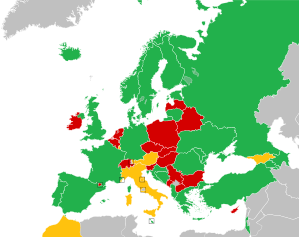
 Participating countries
  Did not qualify from the semi final
  Countries that participated in the past but not in 2009
ESC 2009 Scoreboard Grand Final Ι Detailed voting results:
Final:

ESC 2009 Scoreboard First Semi-Final Ι Detailed voting results:
First Semi-Final:

ESC 2009 Scoreboard Second Semi-Final Ι Detailed voting results:
Second Semi-Final:

The Eurovision Song Contest 2009 was the 54th edition of the Eurovision Song Contest. It took place in Moscow, Russia, following the country’s victory at the 2008 contest with the song “Believe” by Dima Bilan. Organised by the European Broadcasting Union (EBU) and host broadcaster Channel One (C1R), the contest was held at the Olimpiysky Arena, and consisted of two semi-finals on 12 and 14 May, and a final on 16 May 2009. The semi-finals were presented by Russian model Natalia Vodianova and television presenter Andrey Malahov, while the final was presented by Russian television presenter Ivan Urgant and former Russian contestant Alsou Abramova, becoming the first and as of 2022 only time that two different sets of presenters had hosted the semi-finals and finals.
Forty-two countries participated in the contest – down one from the record forty-three the year before. Slovakia returned to the contest for the first time since 1998, while San Marino did not enter due to financial issues. Latvia and Georgia originally announced their intention not to participate, but it was later stated by the EBU that both countries would indeed participate. However, Georgia later decided to withdraw after the EBU rejected its selected song as being a breach of the contest rules.
The winner was Norway with the song “Fairytale”, performed and written by Alexander Rybak. The song received a record-breaking 387 points out of a possible 492, at the time the highest total score in the history of the contest. Iceland, Azerbaijan, Turkey and the United Kingdom rounded out the top five, with the latter achieving their best placing since 2002. Iceland’s second-place finish was the country’s best placing in a decade.
After criticism of the voting system in 2007, changes in the voting procedure were finally made prior to this contest, with the re-introduction of a national jury alongside televoting for the final, while the format of the semi-finals remained the same.

Olimpiysky Arena, Moscow – host venue of the 2009 contest.
The contest was held in Russia following its victory in the 2008 contest in Belgrade, Serbia, with Dima Bilan’s “Believe”. Vladimir Putin, Prime Minister of Russia, stated that the contest would be held in Moscow.
It was proposed by Channel One that the contest be held in Moscow’s Olimpiysky Arena, and this proposal was evaluated by the EBU and confirmed on 13 September 2008. The Director-General of the venue, Vladimir Churilin, refuted rumours of emergency reconstruction of the building, saying: “It will not be required for the Eurovision Song Contest. We now can take up to 25 thousand spectators.”
2.Format. Thirty-seven countries participated in one of the two semi-finals of the contest, with the “Big Four” countries (France, Germany, Spain and the United Kingdom) and the host (Russia) pre-qualified for the final. In addition to those pre-qualified, the final also included the ten selected countries from each semi-final, making a total of twenty-five participants.
A discussion on changes to the format of the 2009 Eurovision Song Contest had taken place at an EBU meeting in Athens, Greece in June 2008 where a proposal was made that could have resulted in the “Big Four” losing their automatic place in the final of the contest. However, it was confirmed that the “Big Four” countries would continue to automatically qualify for the final at the 2009 contest.

The stage design of the contest
2.1.Graphic design. Host broadcaster Chanel One presented the sub-logo and theme for the 2009 contest on 30 January 2009. The sub-logo is based upon a “Fantasy Bird”, which can be used with many colours. As in previous years, the sub-logo was presented alongside the generic logo. 2009 is the only year since 2002 without a slogan.
The stage was designed by New York-based set designer John Casey, and was based around the theme of contemporary Russian avant-garde. Casey, who had previously designed the stage for the Eurovision Song Contest 1997 in Dublin, was also involved in design teams for the 1994 and 1995 contests. He explained that “even before [he] worked with the Russians on the TEFI Awards in Moscow in 1998, [he] was inspired by and drawn to art from the Russian Avant Garde period, especially the constructivists… [He] tried to come up with a theatrical design for the contest that incorporates Russian avant-garde art into a contemporary setting, almost entirely made up of different types of LED screens.” Casey explained that together, the various LED shapes form the finished product. Furthermore, large sections of the stage can move, including the circular central portion of curved LED screens, which can be moved to effect and allow each song to have a different feel.
2.2.Postcards. The music accompanying the postcards used to introduce each participating country was written and produced by British electronic musician Matthew Herbert.
The postcards opened with the words “Moskva 2009” (Москва 2009), the transliterated Russian way to say “Moscow 2009”. It continued with the appearance of Miss World 2008, Ksenia Sukhinova of Russia, and then a group of famous landmarks from the participating country were shown in computer animation. The animation would simulate a pop-up book, with each “page turn” showing different landmarks. Then Sukhinova reappeared again, wearing a hat comprising all of the landmarks shown (as well as having different hairstyle & make-up each time) and a T-shirt with the colours of the respective country’s flag. The Russian video had the exact appearance of Sukhinova shown in the first part of every video, and no different hairstyle was shown for the Russian entry.
Then, on the right, the 2009 contest logo appeared with the name and the flag of the country. Finally a phrase in transliterated Russian word and its English translation were shown. The words shown were as were as following, listed in alphabetical order:
- 🇦🇱 Albania – Ikra (Икра – Caviar)
- 🇦🇩 Andorra – Potselui (Поцелуй – Kiss)
- 🇦🇲 Armenia – Sibir (Сибирь – Siberia)
- 🇦🇿 Azerbaijan – Valenki (Валенки – Winter boots)
- 🇧🇾 Belarus – Karavai (Каравай – Round loaf of bread)
- 🇧🇪 Belgium – Veselo (Весело – Cheerfully)
- 🇧🇦 Bosnia and Herzegovina – Bud Zdorov (Будь здоров – Bless you)
- 🇧🇬 Bulgaria – Krasota (Красота – Beauty)
- 🇭🇷 Croatia – Matryoshka (Матрешка – Russian doll)
- 🇨🇾 Cyprus – Druzhba (Дружба – Friendship)
- 🇨🇿 Czech Republic – Privet! (Привет! – Hi!)
- 🇩🇰 Denmark – Ded Moroz (Дед Мороз – Santa Claus)
- 🇪🇪 Estonia – Gagarin (Гагарин – Surname of Russian cosmonaut Yuri Gagarin, first man in history to go to space)
- 🇫🇮 Finland – Na zdarovie! (На Здоровье! – Cheers!)
- 🇫🇷 France – Lublu (Люблю – Love)
- 🇩🇪 Germany – Poehali! (Поехали! – Let’s go!)
- 🇬🇷 Greece – Vsego dobrogo (Всего доброго – Good luck)
- 🇭🇺 Hungary – Mir (Мир – Peace/World)
- 🇮🇸 Iceland – Sneg (Снег – Snow)
- 🇮🇪 Ireland – Balalaika (Балалайка – Music instrument)
- 🇮🇱 Israel – Horosho (Хорошо – Good/OK)
- 🇱🇻 Latvia – Borsch (Борщ – Beetroot soup)
- 🇱🇹 Lithuania – Kosmos (Космос – Space)
- 🇲🇰 FYRO Macedonia – Klassno (Классно – Great/Cool)
- 🇲🇹 Malta – Skazka (Сказка – Fairytale)
- 🇲🇩 Moldova – Chudo (Чудо – Miracle)
- 🇲🇪 Montenegro – Dobro Pojalovat! (Добро пожаловать! – Welcome!)
- 🇳🇱 The Netherlands – Zima (Зима – Winter)
- 🇳🇴 Norway – Babushka (Бабушка – Grandmother)
- 🇵🇱 Poland – Vecherinka (Вечеринка – Party)
- 🇵🇹 Portugal – Pozhalusta (Пожалуйста – Please)
- 🇷🇴 Romania – Tantsui (Танцуй – Dance)
- 🇷🇺 Russia – Davai-Davai (Давай-Давай – Come on!)
- 🇷🇸 Serbia – Schastie (Счастье – Happiness)
- 🇸🇰 Slovakia – Medved (Медведь – Bear)
- 🇸🇮 Slovenia – Vmeste (Вместе – Together)
- 🇪🇸 Spain – Spasibo (Спасибо – Thank you)
- 🇸🇪 Sweden – Muzika (Музыка – Music)
- 🇨🇭 Switzerland – Vesna (Весна – Spring)
- 🇹🇷 Turkey – Kak dela (Как дела – How are you?)
- 🇺🇦 Ukraine – Shick! (Шик! – Glamour)
- 🇬🇧 United Kindom – Zazhigai! (Зажигай! – Let’s Rock!)
2.3.Semi-final allocation draw. On Friday 30 January 2009, the draw to decide which countries would appear in either the first or second semi-final took place at the Marriott Royal Aurora Hotel. The participating countries excluding the automatic finalists (France, Germany, Russia, Spain & the United Kingdom) were split into six pots, based upon how those countries have been voting. From these pots, half (or as close to half as is possible) competed in the first Semi Final on 10 May 2009. The other half in that particular pot will compete in the second Semi Final on 12 May 2009. The draw for the running order of the semi-finals, finals, and the order of voting, occurred on 16 March 2009 at Cosmos Hotel.
| Pot 1 | Pot 2 | Pot 3 | Pot 4 | Pot 5 | Pot 6 |
|---|---|---|---|---|---|
|
|
|
|
|
|
2.4.Voting system. In response to some broadcasters’ continued complaints about politically charged, neighbourly and diaspora voting, the EBU evaluated the voting procedure used in the contest, with the possibility of a change in the voting system for 2009. Contest organisers sent a questionnaire regarding the voting system to participating broadcasters, and a reference group incorporated the responses into their suggestions for next year’s format. Telewizja Polska (TVP), the Polish broadcaster, suggested that an international jury similar to the one used in the 2008 Eurovision Dance Contest be introduced in the Eurovision Song Contest to lessen the impact of neighbourly voting and place more emphasis on the artistic value of the song. A jury would lead to less political and diaspora voting as the jury members, mandated to be music industry experts, would also have a say in addition to “random members of the public”.
It was decided that for the contest final, each country’s votes would be decided by a combination of 50% televoting results and 50% national jury. The method of selecting the semi-final qualifiers remained the same for the most part, with nine countries, instead of the ten as in years past, qualifying from each semi-final based on the televoting results. For the tenth qualifier from each semi-final, the highest placed country on the back-up jury scoreboard that had not already qualified, was chosen for the final.[18] At the final, each country combined their 1–7, 8, 10,12 points from the televote with their 1–7,8,10,12 jury points to create their “national scorecard”. The country with the most points received 12 points, the second placed country received 10 points, the third placed country received 8 points and so on to 1 points. If a tie arose, the song with the higher televote position was given the advantage and the higher point value. National juries were originally phased out of the contest beginning in 1997, with televoting having become mandatory for nearly all participants since 2003.
Edgar Böhm, director of entertainment for Austria’s public broadcaster Österreichischer Rundfunk (ORF), has stated that the 2008 format with two semi-finals “still incorporates a mix of countries who will be politically favoured in the voting process,” and “that, unless a clear guideline as to how the semifinals are organised is made by the EBU, Austria will not be taking part in Moscow 2009.” Despite the inclusion of jury voting in the final, Austria did not return to the contest in 2009.
2.5.Juries. “In each of the 42 participating countries, a jury of five music industry professionals (including one jury chairperson) will judge the entries taking part in the Final. Their decision will be based on the second dress rehearsal. The names of the jury members must be revealed by the respective participating broadcasters before or during the Final.
- Each jury member of each national jury will make a ranking of his or her ten favourite songs and award points from 1 to 8, 10 and 12 points. The chairperson will allocate 12 points to the song having obtained the highest number of votes from all jury members, 10 points to the song having obtained the second highest number of votes, 8 points to the song having obtained the third highest number of votes, 7 points to the next, and so on down to 1 point for the song having obtained the tenth highest number of votes from all jury members. In the event of a tie for any of the above positions, the order of the tying songs shall be ascertained by a show of hands by the jury members (abstentions are not allowed).
- The jury should consist of a variety of members in terms of age, gender and background. All jury members must be citizens of the country they are representing.
- None of the jury members must be connected with any of the participating songs/artists in such a way that they cannot vote independently. The participating broadcasters must send a letter of compliance with the voting instructions together with signed declarations by each jury member stating that they will vote independently. The jury voting will be monitored by an independent notary and auditor in each country”. – Quotes from Eurovision.tv
3.Participating countries. Following the release of the final participants list by the EBU, 42 countries confirmed their participation in the 2009 contest, including Slovakia, which returned to the contest after 11 years. Georgia originally announced that it was not to participate in the contest due to the Russo-Georgian War in protest of the foreign policies of Russia, but later decided to return to the contest, inspired by its win at the Junior Eurovision Song Contest 2008, as well as Russia’s 12 points to it in the same contest. The country eventually withdrew from the contest due to its entry being deemed to contain political references, including in the title a play on words of Russia’s prime minister’s surname.
Rumours arose surrounding the participation and return of San Marino and Monaco. Télé Monte Carlo (TMC), the Monegasque broadcaster, confirmed that there were talks with the EBU over a Monegasque return to the 2009 contest. At the same time, rumours spread that San Marino’s broadcaster, Radiotelevisione della Repubblica di San Marino (SMRTV), would not participate in the contest due to poor placing at the 2008 contest. In the end, after originally confirming their intent to participate in Moscow, SMRTV was forced to withdraw from the event due to financial difficulties that prevented a second entry.
The Latvian broadcaster, Latvijas Televīzija (LTV), had reportedly withdrawn from the 2009 contest on 17 December 2008, three days after the final participation deadline. This came about due to budget cuts of over 2 million lati (2.8 million euros) from the LTV budget, hindering their ability to pay the participation fee. LTV confirmed that they had informed the EBU of their intent to withdraw based solely on financial difficulties. LTV then went into discussions with the EBU in an attempt to find a solution that would keep the country in the contest. On 20 December 2008, LTV announced that it would be withdrawing from the contest, and that both the EBU and Channel One had agreed not to force a financial penalty on the late withdrawal of the broadcaster from the 2009 contest. LTV also announced its intent to be at the 2010 contest. However, on 12 January 2009, it was announced that Latvia would participate in the 2009 contest. Each country chose its entry for the contest through its own selection process. Some countries selected their entry through an internal selection, where the representing network chose both the song and artist, while others held national finals where the public chose the song, the artist, or both.
Thirty-seven countries participated in one of the two semi-finals of the contest. The semi-final allocation draw took place on 30 January 2009, while the draw for the running order was held on 16 March 2009.
3.1.Returning artists.
| Artist | Country | Previous year(s) |
|---|---|---|
| Chiara | 🇲🇹 Malta | 1998 and 2005 |
| Petr Elfimov | 🇧🇾 Belarus | 2004 (as backing singer for Aleksandra and Konstantin) |
| Sakis Rouvas | 🇬🇷 Greece | 2004 |
| Alexandros Panayi (backing singer for Rouvas) | For 🇨🇾 Cyprus: 1989 (as backing singer for Fani Polymeri and Yiannis Savvidakis), 1991 (as backing singer for Elena Patroklou), 1995, 2000 (as member of Voice) For 🇬🇷 Greece: 2005 (as backing singer for Helena Paparizou) |
|
| Martina | 🇸🇮 Slovenia | 2003 (for 🇭🇷 Croatia, as backing singer for Claudia Beni), 2007 (as backing singer for Alenka Gotar), 2008 (for 🇲🇪 Montenegro, as backing singer for Stefan Filipović) |
| Friðrik Ómar (backing singer for Yohanna) | 🇮🇸 Iceland | 2008 (as member of Euroband) |
3.2.Semi-final 1. The first semi final took place in Moscow on 12 May 2009. The United Kingdom and Germany voted in this semi-final. Before its withdrawal, Georgia was originally drawn to perform in this semi-final.
3.3.Semi-final 2. The second semi final took place in Moscow on 14 May 2009. France and Russia voted in this semi-final. Spain was also scheduled to televote in this semi-final, but due to scheduling errors at TVE, the semi-final was aired late and Spanish viewers were not able to vote, so the Spanish jury’s vote was used instead.
3.4Final. The finalists were: the four automatic qualifiers France, Germany, Spain and the United Kingdom; the host country Russia; the top nine countries from the first semi-final plus one wildcard from the juries; the top nine countries from the second semi-final plus one wildcard from the juries.
The final took place in Moscow on 16 May 2009 at 23:00 MST (19:00 UTC) and was won by Norway.
3.5.Participants and results.
3.6.All the national selections for Eurovision Song Contest 2009:
• National Selections in 2009:
| COUNTRY | EVENT | WINNER |
|---|---|---|
| 🇦🇱 Albania | Festivali i Këngës #47 | Kejsi Tola – “Carry Me in Your Dreams” / “Më merr në ëndërr” |
| 🇦🇩 Andorra | Passaport a Moscou | Susanne Georgi – “La teva decisió (Get a Life)” / “La teva decisió” |
| 🇦🇲 Armenia | (Armenian Selection 2009) | Inga & Anush Arshakyanner / Inga and Anush – “Jan Jan” (Ջան Ջան) |
| 🇧🇾 Belarus | Eurofest 2009 | Petr Elfimov – “Eyes That Never Lie” |
| 🇧🇬 Bulgaria | Evroviziya 2009 | Krassimir Avramov – “Illusion” |
| 🇭🇷 Croatia | Dora 2009 | Igor Cukrov / Igor Cukrov feat. Andrea – “Lijepa Tena“ |
| 🇨🇾 Cyprus | (Cypriot Selection 2009) | Christina Metaxa – “Firefly” |
| 🇨🇿 Czech Republic | (Czech Selection 2009) (song selection) [e] | Gipsy.cz – “Aven Romale“ |
| 🇩🇰 Denmark | Melodi Grand Prix 2009 | Brinck – “Believe Again” |
| 🇪🇪 Estonia | Eesti Laul 2009 | Urban Symphony – “Rändajad“ |
| 🇫🇮 Finland | Euroviisut 2009 | Waldo’s People – “Lose Control” |
| 🇬🇪 Georgia | (Georgian Selection 2009) | Stefane & 3G – “We Don’t Wanna Put In” |
| 🇬🇷 Greece | (Greek Selection 2009) (song selection) [f] | Sakis Rouvas – “This Is Our Night” |
| 🇮🇸 Iceland | Söngvakeppni Sjónvarpsins 2009 | Jóhanna Guðrún Jónsdóttir / Yohanna – “Is It True?” |
| 🇮🇪 Ireland | Eurosong 2009 | Sinéad Mulvey & Black Daisy – “Et Cetera” |
| 🇮🇱 Israel | Kdam Eurovision 2009 (song selection) [g] | Noa & Mira Awad – “There Must Be Another Way” / “Einaiych (עינייך, There Must Be Another Way)” |
| 🇱🇻 Latvia | Eirodziesma 2009 | Intars Busulis – “Probka” (Пробка) / “Sastrēgums” |
| 🇱🇹 Lithuania | Lietuvos Dainų Daina 2009 | Sasha Son – “Love” / “Pasiklydęs žmogus” |
| 🇲🇹 Malta | GO Malta EuroSong 2009 | Chiara – “What If We” |
| 🇲🇩 Moldova | O melodie pentru Europa 2009 | Nelly Ciobanu – “Hora din Moldova“ |
| 🇳🇱 The Netherlands | Nationaal Songfestival 2009 (song selection) [h] | De Toppers / The Toppers – “Shine” |
| 🇲🇰 FYRO Macedonia | Skopje Fest 2009 | Next Time – “Nešto što kje ostane” (Нешто што ќе остане) |
| 🇳🇴 Norway | Melodi Grand Prix 2009 | Alexander Rybak – “Fairytale” |
| 🇵🇱 Poland | Piosenka dla Europy 2009 | Lidia Kopania – “I Don’t Wanna Leave” |
| 🇵🇹 Portugal | Festival da Canção 2009 | Flor-de-Lis – “Todas as ruas do amor“ |
| 🇷🇴 Romania | Selecția Națională 2009 | Elena – “The Balkan Girls” |
| 🇷🇺 Russia | Evrovidenie 2009 | Anastasia Prikhodko – “Mamo” (Мамо) |
| 🇷🇸 Serbia | Beovizija 2009 | Marko Kon & Milan Nikolić / Marko Kon and Milaan – “Cipela” (Ципела) |
| 🇸🇰 Slovakia | Eurosong 2009 | Kamil Mikulčík & Nela Pocisková – “Leť tmou“ |
| 🇸🇮 Slovenia | EMA 2009 | Quartissimo ft. Martina Majerle / Quartissimo feat. Martina – “Love Symphony” |
| 🇪🇸 Spain | Eurovisión 2009 El retorno | Soraya / Soraya Arnelas – “La noche es para mí“ |
| 🇸🇪 Sweden | Melodifestivalen 2009 | Malena Ernman – “La voix“ |
| 🇺🇦 Ukraine | (Ukrainian Selection 2009) | Svetlana Loboda – “Be My Valentine! (Anti-Crisis Girl)” / “Be My Valentine” |
| 🇬🇧 United Kindom | Your Country Needs You (artist selection) [i] | Jade Ewen – “It’s My Time” |
• Internal Selections in 2009:
| 🇦🇿 Azerbaijan | AySel & Arash – “Always” |
| 🇧🇪 Belgium | Copycat – “Copycat” |
| 🇧🇦 Bosnia and Herzegovina | Regina – “Bistra voda“ |
| 🇫🇷 France | Patricia Kaas – “Et s’il fallait le faire“ |
| 🇩🇪 Germany | Alex Swings Oscar Sings! – “Miss Kiss Kiss Bang” |
| 🇭🇺 Hungary | Zoli Ádok – “Dance with Me” |
| 🇲🇪 Montenegro | Andrea Demirović – “Just Get Out of My Life” |
| 🇨🇭 Switzerland | Lovebugs – “The Highest Heights” |
| 🇹🇷 Turkey | Hadise – “Düm Tek Tek” |
3.7.Connections:
4.Detailed voting results.
4.1.Semi-final 1. There were a few glitches out of the 84 total televote counts from the two semi-finals and grand final. In the second semi final, Spain’s and Albania’s delays in broadcasting the show meant that their results were provided by the back-up juries. In the final, SMS voting was the only method used to provide the Hungarian public voting scores as the televotes could not be counted due to a technical problem, and Norway’s jury vote was used because a technical mistake by the local telephone operator rendered the televotes and SMS texts unusable. The full split jury/televoting results of the final were announced by the EBU in July 2009.
Semi-final 1.
| Voting procedure used: [1] 100% televoting, [2] Televoting qualifiers, [3] Back-up jury qualifier |
Total score
|
 |
 |
 |
 |
 |
 |
 |
 |
 |
 |
 |
 |
 |
 |
 |
 |
 |
 |
 |
 |
|
|---|---|---|---|---|---|---|---|---|---|---|---|---|---|---|---|---|---|---|---|---|---|---|
| [¹] | [¹] | [¹] | [¹] | [¹][²] | [¹][²] | [¹] | [¹] | [¹][²] | [¹][²] | [¹] | [¹][²] | [¹] | [¹][²] | [¹][³] | [¹][²] | [¹][²] | [¹][²] | [¹] | [¹] | |||
|
C
o
n
t
e
s
t
a
n
t
s
|
🇲🇪 Montenegro | 44 | 3 | 5 | 1 | 2 | 5 | 1 | 8 | 1 | 6 | 10 | 2 | |||||||||
| 🇨🇿 Czech Republic | 0 | |||||||||||||||||||||
| 🇧🇪 Belgium | 1 | 1 | ||||||||||||||||||||
| 🇧🇾 Belarus | 25 | 2 | 1 | 1 | 4 | 4 | 1 | 1 | 6 | 4 | 1 | |||||||||||
| 🇸🇪 Sweden | 105 | 6 | 4 | 7 | 8 | 7 | 4 | 4 | 7 | 10 | 3 | 4 | 10 | 8 | 8 | 4 | 4 | 7 | ||||
| 🇦🇲 Armenia | 99 | 4 | 12 | 10 | 10 | 5 | 1 | 10 | 10 | 8 | 2 | 2 | 8 | 1 | 1 | 10 | 5 | |||||
| 🇦🇩 Andorra | 8 | 1 | 4 | 3 | ||||||||||||||||||
| 🇨🇭 Switzerland | 15 | 2 | 2 | 2 | 5 | 2 | 2 | |||||||||||||||
| 🇹🇷 Turkey | 172 | 8 | 5 | 12 | 6 | 7 | 10 | 5 | 12 | 6 | 12 | 7 | 12 | 12 | 7 | 5 | 10 | 12 | 12 | 12 | ||
| 🇮🇱 Israel | 75 | 5 | 4 | 3 | 4 | 6 | 7 | 8 | 5 | 3 | 4 | 6 | 1 | 3 | 6 | 4 | 5 | 1 | ||||
| 🇧🇬 Bulgaria | 7 | 2 | 5 | |||||||||||||||||||
| 🇮🇸 Iceland | 174 | 7 | 10 | 7 | 12 | 12 | 12 | 10 | 7 | 8 | 12 | 6 | 4 | 10 | 12 | 12 | 12 | 7 | 6 | 8 | ||
| 🇲🇰 FYRO Macedonia | 45 | 10 | 3 | 6 | 6 | 10 | 2 | 8 | ||||||||||||||
| 🇷🇴 Romania | 67 | 6 | 2 | 1 | 2 | 4 | 7 | 8 | 5 | 4 | 7 | 10 | 2 | 6 | 1 | 2 | ||||||
| 🇫🇮 Finland | 42 | 3 | 1 | 10 | 3 | 12 | 1 | 3 | 5 | 4 | ||||||||||||
| 🇵🇹 Portugal | 70 | 2 | 6 | 3 | 12 | 10 | 2 | 2 | 8 | 7 | 2 | 3 | 7 | 6 | ||||||||
| 🇲🇹 Malta | 86 | 1 | 7 | 8 | 8 | 4 | 3 | 6 | 3 | 5 | 3 | 5 | 6 | 3 | 6 | 5 | 3 | 10 | ||||
| 🇧🇦 Bosnia and Herzegovina | 125 | 12 | 8 | 5 | 5 | 8 | 6 | 8 | 12 | 3 | 7 | 3 | 10 | 5 | 8 | 7 | 7 | 8 | 3 | |||
4.1.1.12 points. Below is a summary of the maximum 12 points each country awarded to another in the 1st semi-final:
| N. | Contestant | Nation(s) giving 12 points |
|---|---|---|
| 8 | 🇹🇷 Turkey | 🇧🇪 Belgium, 🇧🇦 Bosnia and Herzegovina, 🇧🇬 Bulgaria, 🇩🇪 Germany, 🇲🇰 FYRO Macedonia, 🇷🇴 Romania, 🇨🇭 Switzerland, 🇬🇧 United Kindom |
| 7 | 🇮🇸 Iceland | 🇦🇲 Armenia, 🇧🇾 Belarus, 🇫🇮 Finland, 🇮🇱 Israel, 🇲🇹 Malta, 🇵🇹 Portugal, 🇸🇪 Sweden |
| 2 | 🇧🇦 Bosnia and Herzegovina | 🇲🇪 Montenegro, 🇹🇷 Turkey |
| 1 | 🇦🇲 Armenia | 🇨🇿 Czech Republic |
| 🇫🇮 Finland | 🇮🇸 Iceland | |
| 🇵🇹 Portugal | 🇦🇩 Andorra |
4.2.Semi-final 2.
| Voting procedure used: [1] 100% televoting, [2] 100% jury vote, [3] Televoting qualifiers, [4] Back-up jury qualifier |
Total score
|
 |
 |
 |
 |
 |
 |
 |
 |
 |
 |
 |
 |
 |
 |
 |
 |
 |
 |
 |
 |
 |
 |
|
|---|---|---|---|---|---|---|---|---|---|---|---|---|---|---|---|---|---|---|---|---|---|---|---|---|
| [¹][4] | [¹] | [¹] | [¹] | [¹] | [¹][²] | [¹] | [¹] | [¹][²] | [¹] | [¹] | [¹][²] | [¹][²] | [¹][²] | [¹][²] | [²][²] | [¹][²] | [¹][²] | [¹][²] | [¹][²] | [¹][²] | [²][²] | |||
|
C
o
n
t
e
s
t
a
n
t
s
|
🇭🇷 Croatia | 33 | 12 | 2 | 10 | 1 | 3 | 1 | 1 | 3 | ||||||||||||||
| 🇮🇪 Ireland | 52 | 1 | 5 | 3 | 3 | 4 | 10 | 2 | 7 | 2 | 7 | 4 | 3 | 1 | ||||||||||
| 🇱🇻 Latvia | 7 | 6 | 1 | |||||||||||||||||||||
| 🇷🇸 Serbia | 60 | 12 | 2 | 4 | 12 | 2 | 5 | 6 | 12 | 5 | ||||||||||||||
| 🇵🇱 Poland | 43 | 10 | 3 | 3 | 3 | 1 | 1 | 3 | 1 | 6 | 6 | 2 | 4 | |||||||||||
| 🇳🇴 Norway | 201 | 8 | 8 | 10 | 8 | 10 | 8 | 10 | 12 | 8 | 10 | 12 | 8 | 12 | 10 | 8 | 10 | 12 | 12 | 3 | 10 | 12 | ||
| 🇨🇾 Cyprus | 32 | 2 | 1 | 2 | 1 | 7 | 12 | 1 | 6 | |||||||||||||||
| 🇸🇰 Slovakia | 8 | 1 | 4 | 2 | 1 | |||||||||||||||||||
| 🇩🇰 Denmark | 69 | 2 | 7 | 3 | 1 | 12 | 3 | 5 | 3 | 2 | 2 | 5 | 5 | 8 | 7 | 4 | ||||||||
| 🇸🇮 Slovenia | 14 | 7 | 5 | 2 | ||||||||||||||||||||
| 🇭🇺 Hungary | 16 | 2 | 8 | 3 | 3 | |||||||||||||||||||
| 🇦🇿 Azerbaijan | 180 | 6 | 6 | 8 | 6 | 12 | 6 | 10 | 12 | 8 | 6 | 12 | 7 | 10 | 12 | 12 | 10 | 8 | 10 | 12 | 7 | |||
| 🇬🇷 Greece | 110 | 3 | 4 | 10 | 2 | 1 | 12 | 5 | 2 | 4 | 6 | 4 | 4 | 6 | 12 | 4 | 5 | 10 | 6 | 4 | 6 | |||
| 🇱🇹 Lithuania | 66 | 12 | 7 | 4 | 7 | 1 | 5 | 6 | 4 | 5 | 7 | 2 | 5 | 1 | ||||||||||
| 🇲🇩 Moldova | 106 | 5 | 5 | 2 | 7 | 5 | 10 | 7 | 7 | 3 | 5 | 7 | 6 | 8 | 2 | 4 | 7 | 8 | 8 | |||||
| 🇦🇱 Albania | 73 | 10 | 6 | 5 | 4 | 6 | 7 | 4 | 5 | 10 | 5 | 3 | 1 | 5 | 2 | |||||||||
| 🇺🇦 Ukraine | 80 | 3 | 6 | 1 | 7 | 6 | 6 | 8 | 10 | 3 | 2 | 8 | 3 | 7 | 10 | |||||||||
| 🇪🇪 Estonia | 115 | 4 | 4 | 12 | 4 | 8 | 8 | 5 | 8 | 4 | 1 | 7 | 3 | 4 | 8 | 7 | 7 | 5 | 8 | 6 | 2 | |||
| 🇳🇱 The Netherlands | 11 | 1 | 10 | |||||||||||||||||||||
4.2.1.12 points. Below is a summary of the maximum 12 points each country awarded to another in the 2nd semi-final:
| N. | Contestant | Nation(s) giving 12 points |
|---|---|---|
| 6 | 🇳🇴 Norway | 🇦🇿 Azerbaijan, 🇩🇰 Denmark, 🇪🇪 Estonia, 🇱🇹 Lithuania, 🇳🇱 The Netherlands, 🇪🇸 Spain |
| 🇦🇿 Azerbaijan | 🇭🇺 Hungary, 🇲🇩 Moldova, 🇵🇱 Poland, 🇷🇺 Russia, 🇸🇰 Slovakia, 🇺🇦 Ukraine | |
| 3 | 🇷🇸 Serbia | 🇭🇷 Croatia, 🇫🇷 France, 🇸🇮 Slovenia |
| 2 | 🇬🇷 Greece | 🇦🇱 Albania, 🇨🇾 Cyprus |
| 1 | 🇨🇾 Cyprus | 🇬🇷 Greece |
| 🇩🇰 Denmark | 🇳🇴 Norway | |
| 🇭🇷 Croatia | 🇷🇸 Serbia | |
| 🇱🇹 Lithuania | 🇮🇪 Ireland | |
| 🇪🇪 Estonia | 🇱🇻 Latvia |
4.3.Final.
| Place | Combined | Jury | Televoting | |||
|---|---|---|---|---|---|---|
| Country | Points | Country | Points | Country | Points | |
| 1 | 🇳🇴 Norway | 387 | 🇳🇴 Norway | 312 | 🇳🇴 Norway | 378 |
| 2 | 🇮🇸 Iceland | 218 | 🇮🇸 Iceland | 260 | 🇦🇿 Azerbaijan | 253 |
| 3 | 🇦🇿 Azerbaijan | 207 | 🇬🇧 United Kindom | 223 | 🇹🇷 Turkey | 203 |
| 4 | 🇹🇷 Turkey | 177 | 🇫🇷 France | 164 | 🇮🇸 Iceland | 173 |
| 5 | 🇬🇧 United Kindom | 173 | 🇪🇪 Estonia | 124 | 🇬🇷 Greece | 151 |
| 6 | 🇪🇪 Estonia | 129 | 🇩🇰 Denmark | 120 | 🇪🇪 Estonia | 129 |
| 7 | 🇬🇷 Greece | 120 | 🇹🇷 Turkey | 114 | 🇧🇦 Bosnia and Herzegovina | 124 |
| 8 | 🇫🇷 France | 107 | 🇦🇿 Azerbaijan | 112 | 🇷🇺 Russia | 118 |
| 9 | 🇧🇦 Bosnia and Herzegovina | 106 | 🇮🇱 Israel | 107 | 🇦🇲 Armenia | 111 |
| 10 | 🇦🇲 Armenia | 92 | 🇲🇩 Moldova | 93 | 🇬🇧 United Kindom | 105 |
| 11 | 🇷🇺 Russia | 91 | 🇬🇷 Greece | 93 | 🇦🇱 Albania | 81 |
| 12 | 🇺🇦 Ukraine | 76 | 🇧🇦 Bosnia and Herzegovina | 90 | 🇺🇦 Ukraine | 70 |
| 13 | 🇩🇰 Denmark | 74 | 🇲🇹 Malta | 87 | 🇲🇩 Moldova | 66 |
| 14 | 🇲🇩 Moldova | 69 | 🇩🇪 Germany | 73 | 🇷🇴 Romania | 64 |
| 15 | 🇵🇹 Portugal | 57 | 🇦🇲 Armenia | 71 | 🇸🇪 Sweden | 59 |
| 16 | 🇮🇱 Israel | 53 | 🇺🇦 Ukraine | 68 | 🇭🇷 Croatia | 55 |
| 17 | 🇦🇱 Albania | 48 | 🇷🇺 Russia | 67 | 🇫🇷 France | 54 |
| 18 | 🇭🇷 Croatia | 45 | 🇵🇹 Portugal | 64 | 🇵🇹 Portugal | 45 |
| 19 | 🇷🇴 Romania | 40 | 🇭🇷 Croatia | 58 | 🇩🇰 Denmark | 40 |
| 20 | 🇩🇪 Germany | 35 | 🇱🇹 Lithuania | 31 | 🇱🇹 Lithuania | 38 |
| 21 | 🇸🇪 Sweden | 33 | 🇷🇴 Romania | 31 | 🇪🇸 Spain | 38 |
| 22 | 🇲🇹 Malta | 31 | 🇸🇪 Sweden | 27 | 🇫🇮 Finland | 30 |
| 23 | 🇱🇹 Lithuania | 23[c] | 🇦🇱 Albania | 26 | 🇩🇪 Germany | 18 |
| 24 | 🇪🇸 Spain | 23[c] | 🇫🇮 Finland | 12 | 🇲🇹 Malta | 18 |
| 25 | 🇫🇮 Finland | 22 | 🇪🇸 Spain | 9 | 🇮🇱 Israel | 15 |
| Voting procedure used: [1] 50% jury and televote, [2] 100% jury vote |
Total score
|
|
|
|
|
|
|
|
|
|
|
|
|
|
|
|
|
|
|
|
|
|
|
|
|
|
|
|
|
|
|
|
|
|
|
|
|
|
|
|
|
|
|
|
|---|---|---|---|---|---|---|---|---|---|---|---|---|---|---|---|---|---|---|---|---|---|---|---|---|---|---|---|---|---|---|---|---|---|---|---|---|---|---|---|---|---|---|---|---|
| [¹] | [¹] | [¹] | [¹] | [¹] | [¹] | [¹] | [¹] | [¹] | [¹] | [¹] | [¹] | [¹] | [¹] | [¹] | [¹] | [¹] | [¹] | [¹] | [¹] | [¹] | [¹] | [¹] | [¹] | [¹] | [¹] | [¹] | [¹] | [¹] | [¹] | [¹] | [¹] | [¹] | [¹] | [¹] | [¹] | [¹] | [¹] | [¹] | [¹] | [¹] | [²] | |||
|
C
o
n
t
e
s
t
a
n
t
s
|
🇱🇹 Lithuania | 23 | 7 | 1 | 4 | 2 | 7 | 1 | 1 | |||||||||||||||||||||||||||||||||||
| 🇮🇱 Israel | 53 | 8 | 4 | 10 | 4 | 7 | 1 | 5 | 8 | 1 | 5 | |||||||||||||||||||||||||||||||||
| 🇫🇷 France | 107 | 3 | 1 | 7 | 3 | 6 | 5 | 10 | 5 | 1 | 3 | 4 | 7 | 6 | 1 | 6 | 6 | 3 | 2 | 3 | 6 | 3 | 2 | 7 | 6 | 1 | ||||||||||||||||||
| 🇸🇪 Sweden | 33 | 4 | 3 | 2 | 2 | 7 | 1 | 6 | 4 | 4 | ||||||||||||||||||||||||||||||||||
| 🇭🇷 Croatia | 45 | 1 | 8 | 4 | 2 | 12 | 5 | 2 | 6 | 5 | ||||||||||||||||||||||||||||||||||
| 🇵🇹 Portugal | 57 | 8 | 6 | 7 | 7 | 7 | 6 | 10 | 2 | 1 | 3 | |||||||||||||||||||||||||||||||||
| 🇮🇸 Iceland | 218 | 2 | 12 | 7 | 2 | 10 | 10 | 3 | 8 | 5 | 8 | 10 | 5 | 5 | 8 | 8 | 2 | 6 | 4 | 2 | 6 | 5 | 1 | 7 | 8 | 2 | 8 | 10 | 12 | 10 | 3 | 5 | 5 | 7 | 12 | |||||||||
| 🇬🇷 Greece | 120 | 1 | 5 | 5 | 7 | 6 | 2 | 4 | 2 | 2 | 12 | 5 | 5 | 12 | 6 | 12 | 1 | 7 | 8 | 4 | 10 | 4 | ||||||||||||||||||||||
| 🇦🇲 Armenia | 92 | 4 | 7 | 1 | 12 | 3 | 5 | 6 | 8 | 5 | 1 | 6 | 1 | 3 | 2 | 6 | 4 | 2 | 5 | 4 | 7 | |||||||||||||||||||||||
| 🇷🇺 Russia | 91 | 8 | 5 | 8 | 7 | 6 | 7 | 8 | 4 | 1 | 3 | 10 | 6 | 12 | 6 | |||||||||||||||||||||||||||||
| 🇦🇿 Azerbaijan | 207 | 3 | 10 | 1 | 10 | 8 | 1 | 6 | 7 | 4 | 6 | 2 | 8 | 5 | 3 | 3 | 4 | 8 | 3 | 10 | 12 | 4 | 4 | 8 | 6 | 10 | 7 | 10 | 4 | 8 | 10 | 1 | 1 | 10 | 10 | |||||||||
| 🇧🇦 Bosnia and Herzegovina | 106 | 2 | 5 | 2 | 12 | 6 | 4 | 4 | 10 | 8 | 8 | 5 | 12 | 4 | 12 | 10 | 2 | |||||||||||||||||||||||||||
| 🇲🇩 Moldova | 69 | 5 | 4 | 1 | 1 | 7 | 7 | 5 | 3 | 12 | 12 | 2 | 7 | 3 | ||||||||||||||||||||||||||||||
| 🇲🇹 Malta | 31 | 4 | 1 | 1 | 3 | 1 | 6 | 7 | 3 | 5 | ||||||||||||||||||||||||||||||||||
| 🇪🇪 Estonia | 129 | 4 | 1 | 7 | 10 | 8 | 10 | 12 | 10 | 12 | 5 | 4 | 3 | 8 | 6 | 1 | 6 | 5 | 7 | 6 | 4 | |||||||||||||||||||||||
| 🇩🇰 Denmark | 74 | 6 | 4 | 5 | 3 | 5 | 2 | 5 | 1 | 6 | 7 | 2 | 4 | 5 | 8 | 3 | 8 | |||||||||||||||||||||||||||
| 🇩🇪 Germany | 35 | 2 | 3 | 7 | 2 | 1 | 3 | 2 | 1 | 1 | 7 | 6 | ||||||||||||||||||||||||||||||||
| 🇹🇷 Turkey | 177 | 2 | 12 | 5 | 10 | 1 | 6 | 12 | 3 | 3 | 5 | 12 | 10 | 12 | 12 | 3 | 7 | 10 | 8 | 1 | 3 | 6 | 6 | 4 | 5 | 12 | 7 | |||||||||||||||||
| 🇦🇱 Albania | 48 | 1 | 7 | 6 | 7 | 7 | 10 | 1 | 5 | 2 | 2 | |||||||||||||||||||||||||||||||||
| 🇳🇴 Norway | 387 | 12 | 10 | 12 | 8 | 12 | 3 | 12 | 12 | 8 | 12 | 12 | 12 | 10 | 10 | 8 | 8 | 2 | 12 | 10 | 8 | 10 | 10 | 10 | 12 | 3 | 7 | 10 | 10 | 12 | 12 | 12 | 8 | 5 | 5 | 8 | 12 | 8 | 12 | 8 | 12 | 8 | ||
| 🇺🇦 Ukraine | 76 | 6 | 6 | 2 | 5 | 2 | 2 | 4 | 2 | 1 | 10 | 6 | 4 | 3 | 8 | 10 | 5 | |||||||||||||||||||||||||||
| 🇷🇴 Romania | 40 | 7 | 5 | 5 | 2 | 2 | 2 | 2 | 12 | 3 | ||||||||||||||||||||||||||||||||||
| 🇬🇧 United Kindom | 173 | 10 | 3 | 10 | 8 | 6 | 4 | 4 | 6 | 2 | 4 | 7 | 3 | 6 | 7 | 12 | 4 | 6 | 8 | 8 | 7 | 4 | 3 | 4 | 10 | 10 | 3 | 1 | 3 | 7 | 1 | 2 | ||||||||||||
| 🇫🇮 Finland | 22 | 3 | 4 | 8 | 3 | 4 | ||||||||||||||||||||||||||||||||||||||
| 🇪🇸 Spain | 23 | 12 | 3 | 1 | 7 | |||||||||||||||||||||||||||||||||||||||
4.3.1.12 points. Below is a summary of all 12 points in the final:
| N. | Contestant | Nation(s) giving 12 points |
|---|---|---|
| 16 | 🇳🇴 Norway | 🇧🇾 Belarus, 🇩🇰 Denmark, 🇪🇪 Estonia, 🇩🇪 Germany, 🇭🇺 Hungary, 🇮🇸 Iceland, 🇮🇱 Israel, 🇱🇻 Latvia, 🇱🇹 Lithuania, 🇳🇱 The Netherlands, 🇵🇱 Poland, 🇷🇺 Russia, 🇸🇮 Slovenia, 🇪🇸 Spain, 🇸🇪 Sweden, 🇺🇦 Ukraine |
| 6 | 🇹🇷 Turkey | 🇦🇿 Azerbaija, 🇧🇪 Belgium, 🇫🇷 France, 🇲🇰 FYRO Macedonia, 🇨🇭 Switzerland, 🇬🇧 United Kindom |
| 3 | 🇧🇦 Bosnia and Herzegovina | 🇭🇷 Croatia, 🇲🇪 Montenegro, 🇷🇸 Serbia |
| 🇬🇷 Greece | 🇦🇱 Albania, 🇧🇬 Bulgaria, 🇨🇾 Cyprus | |
| 🇮🇸 Iceland | 🇮🇪 Ireland, 🇲🇹 Malta, 🇳🇴 Norway | |
| 2 | 🇪🇪 Estonia | 🇫🇮 Finland, 🇸🇰 Slovakia |
| 🇲🇩 Moldova | 🇵🇹 Portugal, 🇷🇴 Romania | |
| 1 | 🇦🇲 Armenia | 🇨🇿 Czech Republic |
| 🇦🇿 Azerbaija | 🇹🇷 Turkey | |
| 🇭🇷 Croatia | 🇧🇦 Bosnia and Herzegovina | |
| 🇷🇴 Romania | 🇲🇩 Moldova | |
| 🇷🇺 Russia | 🇦🇲 Armenia | |
| 🇪🇸 Spain | 🇦🇩 Andorra | |
| 🇬🇧 United Kindom | 🇬🇷 Greece |
4.3.2.Spokespersons. The voting order and spokespersons during the final were as follows:
- 🇪🇸 Spain – Iñaki del Moral
- 🇧🇪 Belgium – Maureen Louys
- 🇧🇾 Belarus – Ekaterina Litvinova
- 🇲🇹 Malta – Pauline Agius
- 🇩🇪 Germany – Thomas Anders
- 🇨🇿 Czech Republic – Petra Šubrtová
- 🇸🇪 Sweden – Sarah Dawn Finer
- 🇮🇸 Iceland – Þóra Tómasdóttir
- 🇫🇷 France – Yann Renoard
- 🇮🇱 Israel – Ofer Nachshon
- 🇷🇺 Russia – Ingeborga Dapkūnaitė
- 🇱🇻 Latvia – Roberto Meloni
- 🇲🇪 Montenegro – Jovana Vukčević
- 🇦🇩 Andorra – Brigits García
- 🇫🇮 Finland – Jari Sillanpää
- 🇨🇭 Switzerland – Cécile Bähler
- 🇧🇬 Bulgaria – Yoanna Dragneva
- 🇱🇹 Lithuania – Ignas Krupavičius
- 🇬🇧 United Kindom – Duncan James
- 🇲🇰 FYRO Macedonia – Frosina Josifovska
- 🇸🇰 Slovakia – Ľubomír Bajaník
- 🇬🇷 Greece – Alexis Kostalas
- 🇧🇦 Bosnia and Herzegovina – Elvir Laković Laka
- 🇺🇦 Ukraine – Marysya Horobets
- 🇹🇷 Turkey – Meltem Ersan Yazgan
- 🇦🇱 Albania – Leon Menkshi
- 🇷🇸 Serbia – Jovana Janković
- 🇨🇾 Cyprus – Sophia Paraskeva
- 🇵🇱 Poland – Radosław Brzózka
- 🇳🇱 The Netherlands – Yolanthe Cabau van Kasbergen
- 🇪🇪 Estonia – Laura Põldvere
- 🇭🇷 Croatia – Mila Horvat
- 🇵🇹 Portugal – Helena Coelho
- 🇷🇴 Romania – Alina Sorescu
- 🇮🇪 Ireland – Derek Mooney
- 🇩🇰 Denmark – Felix Smith
- 🇲🇩 Moldova – Sandu Leancă
- 🇸🇮 Slovenia – Peter Poles
- 🇦🇲 Armenia – Sirusho
- 🇭🇺 Hungary – Éva Novodomszky
- 🇦🇿 Azerbaijan – Husniyya Maharramova
- 🇳🇴 Norway[d] – Stian Barsnes-Simonsen
5.Broadcasts. Most countries sent commentators to Moscow or commentated from their own country, in order to add insight to the participants and, if necessary, provide voting information.
| Country | Show(s) | Broadcaster(s) | Commentator(s) | – |
|---|---|---|---|---|
| 🇦🇱 Albania | All shows | TVSH | Leon Menkshi | |
| 🇦🇩 Andorra | All shows | ATV | Meri Picart | |
| 🇦🇲 Armenia | All shows | Armenia 1 | Khoren Levonyan | |
| 🇦🇿 Azerbaijan | All shows | İTV | Leyla Aliyeva | – |
| SF1 | Aysel Teymurzadeh (guest) | |||
| Final | Isa Melikov | |||
| 🇧🇾 Belarus | All shows | Belarus-1 | Denis Kurian and Alexander Tikhanovich | |
| 🇧🇪 Belgium | All shows | La Une | French: Jean-Pierre Hautier and Jean-Louis Lahaye | |
| één | Dutch: Anja Daems and André Vermeulen | |||
| La Première | French: Patrick Duhamel and Corinne Boulangier | |||
| Radio 2 | Dutch: Michel Follet and André Vermeulen | |||
| 🇧🇦 Bosnia and Herzegovina | All shows | BHT 1 | Dejan Kukrić | |
| 🇧🇬 Bulgaria | – | BNT | Elena Rosberg and Georgi Kushvaliev | |
| 🇭🇷 Croatia | All shows | HRT | Duško Ćurlić | |
| 🇨🇾 Cyprus | All shows | RIK 1 | Melina Karageorgiou | – |
| CyBC Radio 2 | Nathan Morley | |||
| 🇨🇿 Czech Republic | All shows | ČT1 | Jan Rejžek | |
| 🇩🇰 Denmark | All shows | DR1 | Nikolaj Molbech | – |
| 🇪🇪 Estonia | All shows | ETV | Marko Reikop | |
| Final | Olav Osolin | |||
| 🇫🇮 Finland | All shows | YLE TV2 | Finnish: Jaana Pelkonen, Mikko Peltola and Asko Murtomäki | – |
| Swedish: Thomas Larsson | ||||
| YLE Radio Suomi | Finnish: Sanna Kojo and Jorma Hietamäki | |||
| 🇫🇷 France | SF2 | France 4 | Peggy Olmi and Yann Renoard | – |
| Final | France 3 | Julien Courbet and Cyril Hanouna | ||
| France Bleu | François Kevorkian | |||
| 🇩🇪 GERMANY | All shows | Das Erste | Tim Frühling | – |
| Final | NDR 2 | Ina Müller and Thomas Mohr | ||
| 🇬🇷 GREECE | All shows | NET | Betty and Mathildi Maggira | – |
| Deftero Programma | Maria Kozakou | – | ||
| 🇭🇺 HUNGARY | All shows | m1 | Gábor Gundel Takács | |
| 🇮🇸 ICELAND | All shows | Sjónvarpið | Sigmar Guðmundsson | – |
| 🇮🇪 Ireland | Semi-finals | RTÉ Two | Marty Whelan | – |
| Final | RTÉ One | |||
| SF2/Final | RTÉ Radio 1 | Maxi | – | |
| 🇮🇱 ISRAEL | – | IBA | No commentary | |
| 🇱🇻 LATVIA | All shows | LTV | Kārlis Streips | |
| 🇱🇹 LITHUANIA | All shows | LRT | Darius Užkuraitis | |
| 🇲🇰 FYRO MACEDONIA | – | MRT | Karolina Petkovska and Aleksandra Jovanovska | |
| 🇲🇹 MALTA | All shows | TVM | Valerie Vella | – |
| 🇲🇩 MOLDOVA | – | TVM | Rosalina Rusu and Andrei Sava | |
| 🇲🇪 Montenegro | – | TVCG2 | Dražen Bauković and Tamara Ivanković | |
| 🇳🇱 The Netherlands | All shows | Nederland 1 | Cornald Maas | – |
| 🇳🇴 NORWAY | All shows | NRK1 | Synnøve Svabø | – |
| 🇵🇱 POLAND | SF2/Final | TVP1 | Artur Orzech | – |
| 🇵🇹 PORTUGAL | All shows | RTP1 | Hélder Reis | – |
| 🇷🇴 ROMANIA | All shows | TVR1 | Ioana Isopescu and Alexandru Nagy | |
| 🇷🇺 RUSSIA | All shows | Channel One | Yana Churikova | |
| Semi-finals | Alexey Manuylov | |||
| Final | Philipp Kirkorov | |||
| 🇷🇸 SERBIA | SF1 | RTS1 | Dragan Ilić | |
| SF2/Final | Duška Vučinić-Lučić | |||
| 🇸🇰 Slovakia | All shows | Dvojka | Roman Bomboš | – |
| 🇸🇮 SLOVENIA | All shows | RTVSLO | Andrej Hofer | |
| 🇪🇸 SPAIN | All shows | La 1, La 2 | Joaquín Guzmán | – |
| 🇸🇪 SWEDEN | All shows | SVT1 | Shirley Clamp and Edward af Sillén | – |
| SF1 | Arash (guest) | |||
| All shows | SR P3 | Carolina Norén and Björn Kjellman | ||
| 🇨🇭 SWITZERLAND | All shows | SF zwei | German: Sven Epiney | |
| TSR 2 | French: Jean-Marc Richard and Nicolas Tanner | |||
| RSI La 2 | Italian: Sandy Altermatt | |||
| 🇹🇷 Turkey | All shows | TRT 1, TRT Türk, TRT Avaz | Bülend Özveren | |
| 🇺🇦 UKRAINE | All shows | First National | Timur Miroshnychenko | |
| 🇬🇧 UNITED KINDOM | Semi-finals | BBC Three | Paddy O’Connell and Sarah Cawood | – |
| Final | BBC One | Graham Norton | ||
| BBC Radio 2 | Ken Bruce |
| Country | Show(s) | Broadcaster(s) | Commentator(s) | – |
|---|---|---|---|---|
| 🇦🇺 Australia | All shows | SBS | Julia Zemiro and Sam Pang | – |
| 🇦🇹 Austria | All shows | ORF 2 | Benny Hörtnagl | |
 New Zealand New Zealand |
Final | Triangle Stratos | Unknown | – |
5.1.International broadcasts.
- 🇦🇺 Australia – Although Australia was not eligible to enter, the contest was broadcast on Special Broadcasting Service (SBS) as in previous years. The first semi-final was broadcast on Friday 15 May 2009, the second semi-final on Saturday 16 May 2009, and the final on Sunday 17 May 2009, with all shows broadcast at 19:30 local time (09:30 UTC). This year, instead of airing the United Kingdom’s commentary, the broadcaster sent its own commentators, Julia Zemiro and Sam Pang. They also anchored a number of behind the scenes and interview pieces, which were inserted during assigned the various broadcasts. In recent years the contest has been one of SBS’s highest-rating programmes in terms of viewer numbers. The contest rated well for SBS with 482,000 viewers tuning in for the final, with 414,000 for the second semi-final and 276,000 for the first semi-final. SBS also broadcast the Junior Eurovision and Eurovision Dance Contests for 2008 in the lead-up to the 2009 Eurovision Song Contest. The Eurovision Dance Contest 2008 was broadcast on SBS on Wednesday 6 May 2009 at 13:00 local time (03:00 UTC), while the Junior Eurovision Song Contest 2008 was broadcast on Wednesday 13 May at 13:00 local time (03:00 UTC). SBS also broadcast the EBU produced Eurovision Countdown shows on 13, 14 and 15 May 2009 at 17:30 local time (07:30 UTC) before the semi-finals and final.
- 🇦🇹 Austria – Österreichischer Rundfunk (ORF) confirmed that, despite having no Austrian entry in the competition, they would broadcast the contest on television. Both semi-finals were broadcast on ORF on a time delay, beginning past midnight CET. A song presentation show was broadcast on the night of the final, before broadcasting live the voting in the final. The entire Eurovision final was broadcast later that night. In all three shows the commentator was Hitradio Ö3 radio presenter Benny Hörtnagl.
- New Zealand – Although New Zealand was not eligible to enter, the final of the contest was broadcast on Triangle TV’s satellite channel STRATOS on 17 May 2009. They also did a compilation of the two 2008 semi-finals on 3 May 2009 and the Eurovision Song Contest 2008 final on 10 May 2009. This was the first time in 30 years that the contest has been broadcast in New Zealand. The 2009 final was broadcast in local prime time, about 10 hours after the show has finished in Moscow.
A commentated live broadcast of the Eurovision Song Contest was available worldwide via satellite by broadcaster streams such as:
- 🇧🇪 Belgium: BVN
- 🇧🇬 Bulgaria: BNT Sat
- 🇭🇷 Croatia: HRT Sat
- 🇨🇾 Cyprus: RIK Sat
- 🇬🇷 Greece: ERT World
- 🇱🇹 Lithuania: LTV World
- 🇲🇰 FYRO Macedonia: MKTV Sat
- 🇲🇪 Montenegro: TVCG Sat
- 🇳🇱 The Netherlands: BVN
- 🇵🇱 Poland: TVP Polonia
- 🇵🇹 Portugal: RTP Internacional
- 🇷🇴 Romania: TVR International
- 🇷🇸 Serbia: RTS Sat
- 🇪🇸 Spain: TVE Internacional
- 🇹🇷 Turkey: TRT AVAZ
Additionally, the official Eurovision Song Contest website also provided a live stream without commentary via the peer-to-peer medium Octoshape.
6.Incidents. The 2009 contest experienced several controversies and incidents during its lead-up, including the interpretation of over Georgia’s entry as an attack against the Russian prime minister, conflicts between Armenia and Azerbaijan stemming from the inclusion of a monument in a disputed region to represent Armenia in a video introduction, Spain’s broadcaster showing a semi-final on tape delay after a scheduling conflict, and protests over Russia’s treatment of LGBT people to coincide with the contest.
6.1.Armenia and Azerbaijan. Armenia and Azerbaijan experienced several conflicts during the 2009 contest.
After the first semi-final, representatives for Azerbaijan complained to the EBU over the introductory “postcard” preceding the Armenian entry, since the video clip had included a depiction of We Are Our Mountains, a monumental statue located in the unrecognized Nagorno-Karabakh republic, which is considered to be a de jure part of Azerbaijan. As a result of the complaint, the statue was edited out during the finals. However, Armenia retaliated during the results presentations by having the monument displayed on a video screen in the background, and having presenter Sirusho read the results from a clipboard decorated with a photo of the monument.
There were also allegations that no number had been shown for the public to call and vote for Armenia’s entry during the telecast in Azerbaijan. Representatives denied these allegations by showing a video that showed an untampered signal during the Armenian performance. However, a subsequent EBU investigation found that the Azerbaijani broadcaster, Ictimai TV, had blurred out the number for Armenia’s entry and distorted the TV signal when the Armenian contestants were performing on stage. The EBU fined Ictimai TV an undisclosed sum and is said to have threatened to exclude the broadcaster from the competition for up to three years if further infractions of the Eurovision Song Contest rules are made.
In August 2009, a number of Azerbaijanis who had voted for Armenia’s entry during the 2009 contest were summoned for questioning at the Ministry of National Security in Baku, during which they were accused of being “unpatriotic” and “a potential security threat”. This incident initiated an EBU investigation that resulted in a change to the Eurovision rules to allow a country’s participating broadcaster to be liable “for any disclosure of information which could be used to identify voters”. Despite the conflict, Armenia gave Azerbaijan 1 point in the final, the only time the two countries have exchanged points in a final as of 2022.
6.2.Broadcast delays in Spain. Due to its commitments to broadcast the Madrid Open tennis tournament, Spanish broadcaster Televisión Española (TVE) broadcast the second semifinal on a tape delay on its channel La 2, approximately 66 minutes after the show began in Moscow. As a result of the tape delay, the broadcaster also utilized a backup jury rather than televoting to decide its votes. TVE had already switched to voting in the second semi-final due to another scheduling conflict, which had already sparked criticism from the neighboring Andorran and Portuguese delegations, who stated that a Spanish vote would have positively influenced their performance in the first semifinal.
On the day following the semi-final, local newspaper El Mundo speculated that RTVE may have administered the delay on purpose in order to prevent Spain from winning the contest, claiming that the broadcaster would not be ready to host the contest if Spain were to win. A statement in ABC had cited technical difficulties for the delay.
After the semi-finals, the EBU announced that Spain would face sanctions for their actions in the contest, but also stated that their participation in the 2009 contest in Moscow would not be affected. The Spanish entry, “La noche es para mí”, did not fare well in the contest itself, placing 24th during the finals.
6.3.Georgian entry disqualification and withdrawal. After being placed to compete in the first semi-final on 12 May, a national final was held in Georgia to select its entry. The selected entry, Stephane & 3G with “We Don’t Wanna Put In”, gained coverage and controversy due to perceived political connotations within its lyrics relating to Russian Prime Minister Vladimir Putin. The EBU rejected the song due to these political connotations, calling it a clear breach of the contest’s rules. The EBU then asked the Georgian broadcaster Georgian Public Broadcaster (GPB) on 10 March to change either the lyrics of the song, or to select a new song to compete for the country.[108][109] GPB refused to change the lyrics or the song, claiming that the song contained no political references, and that the rejection by the EBU was due to political pressure from Russia. As such, GPB withdrew Georgia from the contest on 11 March. The band admitted the political content of the song and their intention was just to embarrass Putin in Moscow.
6.4.LGBT protests. Russian gay rights activist Nikolai Alekseev used the contest’s presence in Russia as a platform for promoting the country’s position on the rights of LGBT people, countering Moscow mayor Yury Luzhkov’s view that homosexuality is satanic. Alekseev announced that the 2009 edition of Moscow Pride, the city’s annual gay pride parade, would coincide with the finals on 16 May, the day before the International Day Against Homophobia. The parade was also renamed “Slavic Pride”, to promote gay rights and culture across the entire Slavic region of Europe.[112] The parade was denied authorisation by Moscow officials on the basis that it would “destroy morals in society” and statements were issued stating that protesters would be treated “toughly”, and that “tough measures” would be faced by anyone joining the march.
The rally was broken up by Moscow police, and 20 protesters were arrested including Nikolai Alekseev and human rights campaigner Peter Tatchell, who exclaimed that “this shows the Russian people are not free” as he was taken away by police. Sweden’s representative Malena Ernman supported the cause saying that she is not homosexual herself but would be proud to call herself gay to support her fans, stating that she was sad that the Moscow government would not allow a “tribute to love” to occur. The winner of the contest, Norway’s Alexander Rybak, also referred to the controversy in an interview when he called the Eurovision Song Contest itself the “biggest gay parade”.
The Dutch group De Toppers made news by member Gordon threatening to boycott the final if the gay parade was violently beaten down. However, the group’s failure to qualify for the final left this threat redundant.
7.Other awards. In addition to the main winner’s trophy, the Marcel Bezençon Awards and the Barbara Dex Award were contested during the 2009 Eurovision Song Contest. The OGAE, “General Organisation of Eurovision Fans” voting poll also took place before the contest.
7.1.Marcel Bezençon Awards. The Marcel Bezençon Awards, organised since 2002 by Sweden’s then-Head of Delegation and 1992 representative Christer Björkman, and 1984 winner Richard Herrey, honours songs in the contest’s final.[118] The awards are divided into three categories: the Artistic Award, the Composers Award, and the Press Award.
| Category | Country | Song | Performer(s) | Songwriter(s) |
|---|---|---|---|---|
| Artistic Award | 🇫🇷 France | “Et s’il fallait le faire” | Patricia Kaas |
|
| Composers Award | 🇧🇦 Bosnia and Herzegovina | “Bistra voda” | Regina | Aleksandar Čović |
| Press Award | 🇳🇴 Norway | “Fairytale” | Alexander Rybak | Alexander Rybak |
7.2.OGAE. OGAE, an organisation of over forty Eurovision Song Contest fan clubs across Europe and beyond, conducts an annual voting poll first held in 2002 as the Marcel Bezençon Fan Award. After all votes were cast, the top-ranked entry in the 2009 poll was also the winner of the contest, Norway’s “Fairytale” performed by Alexander Rybak; the top five results are shown below.
| Country | Song | Performer(s) | OGAE result |
|---|---|---|---|
| 🇳🇴 Norway | “Fairytale” | Alexander Rybak | 323 |
| 🇫🇷 France | “Et s’il fallait le faire” | Patricia Kaas | 184 |
| 🇸🇪 Sweden | “La voix” | Malena Ernman | 172 |
| 🇧🇦 Bosnia and Herzegovina | “Bistra voda” | Regina | 152 |
| 🇪🇸 Spain | “La noche es para mí” | Soraya Arnelas | 132 |
7.3.Barbara Dex Award. The Barbara Dex Award is a humorous fan award given to the worst dressed artist each year. Named after Belgium’s representative who came last in the 1993 contest, wearing her self-designed dress, the award was handed by the fansite House of Eurovision from 1997 to 2016 and is being carried out by the fansite songfestival.be since 2017.
| Country | Performer(s) |
|---|---|
| 🇭🇺 Hungary | Zoli Ádok |

Cover art of the official album
8.Official album. Eurovision Song Contest: Moscow 2009 was the official compilation album of the 2009 contest, put together by the European Broadcasting Union and released by EMI Records and CMC International on 11 May 2009. The album featured all 42 songs that entered in the 2009 contest, including the semi-finalists that failed to qualify into the grand final.
8..Charts.
| Chart (2009) | Peak position |
|---|---|
| German Compilation Albums (Offizielle Top 100) | 3 |
9.Notes.
- [a] Georgia withdrew after the semi-final allocation draw.
- [b] a b Contains repeated phrases in Turkish.
- [c] a b Despite finishing with the same number of points as Spain, Lithuania is deemed to have finished in 23rd place due to receiving points from a greater number of countries.
- [d] Norway was originally scheduled to announce its votes as the 17th country, but instead voted 42nd (last). This was due to a technical error.
- [e] The group Gipsy.cz was internally selected to represent Czech Republic at Eurovision 2009. The Czech public could vote on two songs between 1 and 14 March 2009. The winning song “Aven Romale” was officially presented on 21 March 2009 during the ČT Anděl Music Awards.
- [f] Sakis Rouvas was internally selected to represent Greece at Eurovision 2009. The song “This Is Our Night” that Sakis performed at Eurovision was selected through a national final with three songs, all composed by Dimitris Kontopoulos.
- [g] Achinoam Nini, known as Noa was internally selected to represent Israel at Eurovision 2009. Later it was announced that she would be joined by Mira Awad for Eurovision. The song “There Must Be Another Way” / “Einaiych” (עינייך) that Noa & Mira performed at Eurovision was selected through the show “Kdam Eurovision 2009” with four songs.
- [h] The group De Toppers was internally selected to represent Netherlands at Eurovision 2009. The song “Shine” that De Toppers performed at Eurovision was selected through the Nationaal Song festival. From 330 submitted songs, De Toppers selected sic songs for the contest.
- [i] Andrew Lloyd Webber (music) and Diane Warren (lyrics) wrote the British song for Eurovision 2009, “It’s My Time”. At the show Eurovision: Your Country Needs You, six artists competed in three heats and a final to represent United Kingdom in Moscow. The three finalists performed three songs during the show: a new song; a song previously performed by the artist in one of the heats; and their performance of the UK Eurovision entry, “It’s My Time”.
10.Trivial / Fun facts.
- The contest was hosted by two different pairs of hosts – one pair in the Semi-Finals and the other pair in the Grand Final.
- Both Semi-Finals were hosted by the supermodel Natalya Vodyanova and one of the most popular TV hosts Andrey Malakhov.
- The Grand Final was hosted by the singer (and their 2000 contest participant) Alsou and the TV star Ivan Urgant.
|
← Eurovision Song Contest 2008 • Eurovision Song Contest 2009 • Eurovision Song Contest 2010 → |
|
|
Countries (in order of appearance) |
|
| Final | Lithuania ⦁ Israel ⦁ France ⦁ Sweden ⦁ Croatia ⦁ Portugal ⦁ Iceland ⦁ Greece ⦁ Armenia • Russia ⦁ Azerbaijan ⦁ Bosnia and Herzegovina • Moldova • Malta ⦁ Estonia • Denmark ⦁ Germany ⦁ Turkey ⦁ Albania ⦁ Norway (winner) ⦁ Ukraine ⦁ Romania ⦁ United Kingdom ⦁ Finland ⦁ Spain |
| First Semi-Final | Montenegro ⦁ Czech Republic ⦁ Belgium ⦁ Belarus ⦁ Sweden ⦁ Armenia ⦁ Andorra ⦁ Switzerland ⦁ Turkey • Israel ⦁ Bulgaria • Iceland (winner) • FYRO Macedonia ⦁ Romania ⦁ Finland ⦁ Portugal ⦁ Malta ⦁ Bosnia and Herzegovina |
| Second Semi-Final | Croatia ⦁ Ireland ⦁ Latvia ⦁ Serbia ⦁ Poland ⦁ Norway (winner) ⦁ Cyprus ⦁ Slovakia ⦁ Denmark • Slovenia ⦁ Hungary ⦁ Azerbaijan ⦁ Greece • Lithuania • Moldova • Albania ⦁ Ukraine ⦁ Estonia ⦁ The Netherlands |
|
Artists (in order of appearance) |
|
| Final | Sasha Son ⦁ Noa and Mira Awad ⦁ Patricia Kaas ⦁ Malena Ernman ⦁ Igor Cukrov feat. Andrea ⦁ Flor-de-Lis ⦁ Yohanna ⦁ Sakis Rouvas ⦁ Inga and Anush ⦁ Anastasia Prikhodko ⦁ AySel and Arash ⦁ Regina • Nelly Ciobanu ⦁ Chiara ⦁ Urban Symphony ⦁ Brinck • Alex Swings Oscar Sings! ⦁ Hadise ⦁ Kejsi Tola ⦁ Alexander Rybak (winner) • Svetlana Loboda • Elena ⦁ Jade Ewen ⦁ Waldo’s People • Soraya Arnelas |
| First Semi-Final | Andrea Demirović ⦁ Gipsy.cz ⦁ Copycat ⦁ Petr Elfimov ⦁ Malena Ernman ⦁ Inga and Anush ⦁ Susanne Georgi ⦁Lovebugs ⦁ Hadise ⦁ Noa and Mira Awad • Krassimir Avramov ⦁ Yohanna (winner) ⦁ Next Time • Elena • Waldo’s People ⦁ Flor-de-Lis ⦁ Chiara • Regina |
| Second Semi-Final | Igor Cukrov feat. Andrea ⦁ Sinéad Mulvey and Black Daisy ⦁ Intars Busulis ⦁ Marko Kon and Milaan ⦁ Lidia Kopania ⦁ Alexander Rybak (winner) ⦁ Christina Metaxa ⦁ Kamil Mikulčík and Nela Pocisková ⦁ Brinck ⦁ Quartissimo feat. Martina • Zoli Ádok ⦁ AySel and Arash ⦁ Sakis Rouvas • Sasha Son • Nelly Ciobanu ⦁ Kejsi Tola ⦁ Svetlana Loboda ⦁ Urban Symphony • The Toppers |
|
Songs (in order of appearance) |
|
| Final | “Love” ⦁ “There Must Be Another Way” ⦁ “Et s’il fallait le faire” ⦁ “La voix” ⦁ “Lijepa Tena” ⦁ “Todas as ruas do amor” ⦁ “Is It True?” ⦁ “This Is Our Night” ⦁ “Jan Jan” (Ջան Ջան) • “Mamo” (Мамо) • “Always” • “Bistra voda” ⦁ “Hora din Moldova” ⦁ “What If We” ⦁ “Rändajad” • “Believe Again” • “Miss Kiss Kiss Bang” • “Düm Tek Tek” • “Carry Me in Your Dreams” • “Fairytale” (winner) • “Be My Valentine! (Anti-Crisis Girl)” ⦁ “The Balkan Girls” • “It’s My Time” • “Lose Control” • “La noche es para mí“ |
| First Semi-Final | “Just Get Out of My Life” ⦁ “Aven Romale” ⦁ “Copycat” ⦁ “Eyes That Never Lie” ⦁ “La voix” ⦁ “Jan Jan” (Ջան Ջան) ⦁ “La teva decisió (Get a Life)” ⦁ “The Highest Heights” ⦁ “Düm Tek Tek” • “There Must Be Another Way” • “Illusion” • “Is It True?” (winner) • “Nešto što kje ostane” (Нешто што ќе остане) • “The Balkan Girls” • “Lose Control” ⦁ “Todas as ruas do amor” • “What If We” • “Bistra voda“ |
| Second Semi-Final | “Lijepa Tena” ⦁ “Et Cetera” ⦁ “Probka” (Пробка) ⦁ “Cipela” (Ципела) ⦁ “I Don’t Wanna Leave” ⦁ “Fairytale” (winner) ⦁ “Firefly” ⦁ “Leť tmou” ⦁ “Believe Again” • “Love Symphony” • “Dance with Me” • “Always” • “This Is Our Night” • “Love” • “Hora din Moldova” ⦁ “Carry Me in Your Dreams” • “Be My Valentine! (Anti-Crisis Girl)” • “Shine” |
| Non-participating entries: Georgia: Stephane & 3G (სტეფანე და 3G) – “We Don’t Wanna Put In” • Hungary: Márk Zentai – “If You Wanna Party” • Hungary: Katya Tompos – “Magányos Csónak” (Lonely boat) | |
Devi effettuare l'accesso per postare un commento.